The Cyprus Question stands as one of Europe’s most enduring political failures, a testament to how good intentions can crystallise into permanent stalemate. For over two decades since the turn of the millennium, Cyprus has remained locked in what scholars euphemistically term a “frozen conflict” – a state of suspended animation where the absence of war masquerades as peace. This is not merely a diplomatic inconvenience or a relic of Cold War politics; it represents a fundamental failure of the international system to address the legitimate aspirations of both Greek and Turkish Cypriots whilst allowing external powers to manipulate the island’s fate for their own strategic purposes.
The story of Cyprus in the 21st century is one of missed opportunities, hollow promises, and the triumph of political expedience over principled leadership. It is a tale that exposes the limitations of the European Union’s much-vaunted soft power and the United Nations’ peacekeeping machinery when confronted with the hard realities of geopolitical competition. Most damning of all, it reveals how the very institutions designed to promote peace and reconciliation can become part of the problem, entrenching division rather than healing it.
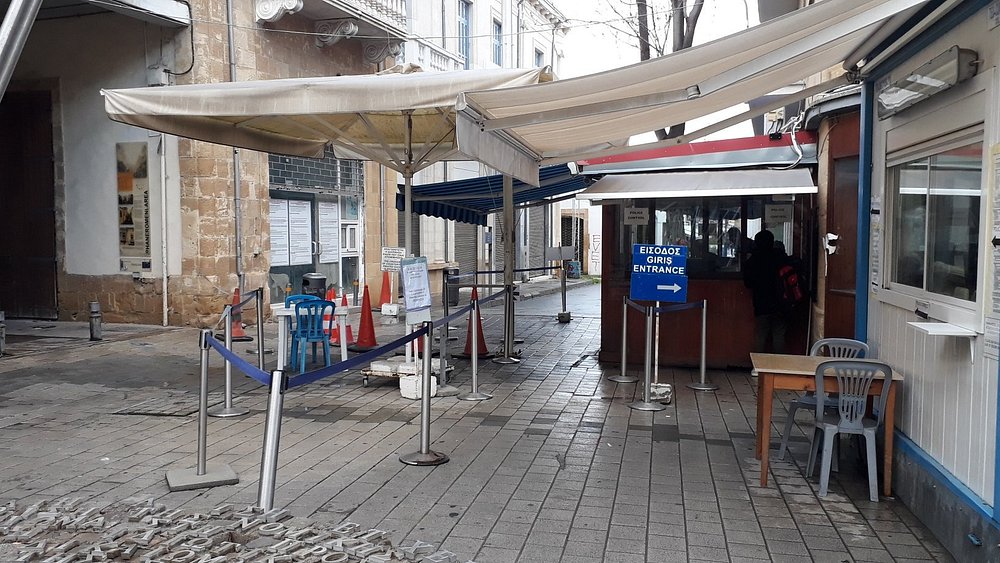
Since 1974, Cyprus has been artificially divided between the internationally recognised Republic of Cyprus in the south and the self-declared Turkish Republic of Northern Cyprus in the north, recognised only by Turkey. This division has created two parallel societies, each with its own institutions, economy, and increasingly distinct identity. The United Nations buffer zone that separates them has become not a temporary measure but a permanent fixture of the island’s geography – a concrete manifestation of political failure that runs through the heart of Nicosia, the world’s last divided capital.
The fundamental question that haunts Cyprus in the 21st century is not whether reunification is desirable – most observers accept that it would benefit both communities – but why it has proven so consistently elusive. The answer lies in a toxic combination of factors: the entrenchment of separate institutions that have developed their own momentum, the manipulation of Cypriot politics by external powers pursuing their own agendas, and the failure of the international community to create meaningful incentives for compromise. What we have witnessed is not the gradual evolution towards unity, but the hardening of division into permanence.
The Republic of Cyprus and the TRNC: Two Societies, One Island
To understand the Cyprus Question in the 21st century, one must first grasp the profound differences that have emerged between the two parts of the island. The Republic of Cyprus, controlling approximately 63% of the island’s territory, has evolved into a modern European state with all the trappings of EU membership. With a population of 918,100 according to the 2021 census, it has achieved remarkable economic prosperity, transforming itself from a war-torn society in the 1970s into a significant regional financial centre. The southern part of the island boasts a GDP per capita that places it among the more affluent EU member states, supported by a diversified economy based on services, tourism, and offshore financial services.
The contrast with the Turkish Republic of Northern Cyprus could not be more stark. With a population of approximately 320,000, the TRNC operates in a state of international isolation that has profound implications for every aspect of life. Recognised only by Turkey, it exists in a legal limbo that severely constrains its economic development and international engagement. The economy of the north is heavily dependent on Turkish support, with the Turkish lira serving as the primary currency and Turkish investment providing the backbone of economic activity. This dependence has created a situation where the TRNC is increasingly integrated into the Turkish economy rather than developing as an independent entity.
The political systems of the two parts of Cyprus have also diverged significantly. The Republic of Cyprus operates as a presidential democracy within the EU framework, with all the institutional protections and democratic safeguards that membership entails. The TRNC, by contrast, operates as a semi-presidential system that is heavily influenced by Turkish political dynamics. Turkish Cypriot politics has become increasingly dominated by parties that are aligned with Turkish interests, whilst those advocating for reunification have found themselves marginalised.
This political divergence has been reinforced by economic realities. The TRNC’s economic development has been constrained by its international isolation, with businesses unable to engage in direct trade with most of the world. The result has been an economy that is increasingly dependent on Turkey for investment, trade, and financial support. Turkish settlers have also changed the demographic composition of the north, with estimates suggesting that Turkish nationals now constitute a significant portion of the population. This demographic shift has profound implications for the political dynamics of any future reunification negotiations.
The economic disparities between north and south have created a situation where the material incentives for reunification have become increasingly unclear. Whilst Turkish Cypriots in the north face economic constraints due to international isolation, they also benefit from lower costs of living and significant Turkish investment. Greek Cypriots in the south enjoy higher living standards but face the prospect of having to subsidise the north’s development in any reunification scenario. These economic realities have created constituencies on both sides with vested interests in maintaining the status quo.
The Endless Cycle of Failed Negotiations
The 21st century has witnessed a series of increasingly elaborate attempts to resolve the Cyprus Question, each raising hopes before ultimately foundering on the same fundamental obstacles. The most significant of these was the Annan Plan of 2004, named after UN Secretary-General Kofi Annan, which represented the most comprehensive attempt at reunification since the island’s division. The plan envisaged the creation of a United Cyprus Republic consisting of two constituent states – a Greek Cypriot state and a Turkish Cypriot state – under a federal government.
The Annan Plan was notable for its complexity and detail, running to over 9,000 pages and addressing virtually every aspect of a potential settlement. It proposed a rotating presidency, with the executive power shared between Greek and Turkish Cypriots, and a complex system of checks and balances designed to prevent either community from dominating the other. The plan also addressed contentious issues such as property rights, with a combination of restitution and compensation for those who had lost property during the division.
The plan was put to simultaneous referendums in both parts of Cyprus on 24th April 2004, just one week before the Republic of Cyprus was due to join the European Union. The results were a devastating blow to reunification hopes: whilst Turkish Cypriots voted in favour by 65%, Greek Cypriots rejected the plan by 76%. The rejection was particularly bitter given the timing – it meant that Cyprus joined the EU as a divided island, with EU law suspended in the north.
The failure of the Annan Plan revealed the fundamental problem with Cyprus negotiations: the two communities had developed such different priorities and expectations that finding common ground had become virtually impossible. Greek Cypriots rejected the plan primarily because they felt it legitimised the results of the 1974 Turkish invasion and did not provide adequate guarantees for the return of property or the withdrawal of Turkish troops. Turkish Cypriots, who had voted in favour, felt betrayed by the international community’s failure to reward their positive vote with meaningful recognition or an end to their isolation.
The post-Annan period has seen a succession of negotiating processes, each following a depressingly familiar pattern. Negotiations would begin with great fanfare and international support, make initial progress on technical issues, and then collapse when fundamental questions were addressed. The most recent serious attempt was the Crans-Montana talks in 2017, which brought together the leaders of both communities along with the foreign ministers of Greece, Turkey, and the United Kingdom. The talks were seen as the best opportunity for a settlement in over a decade, but they collapsed in acrimony over the fundamental issue of security guarantees.
The failure of Crans-Montana was particularly damaging because it occurred at a time when both communities had leaders who were ostensibly committed to reunification. The collapse of the talks over the issue of Turkey’s military presence and guarantee rights highlighted how external powers continue to shape the Cyprus Question in ways that make resolution more difficult. The Turkish government’s insistence on maintaining troops on the island and retaining intervention rights was unacceptable to Greek Cypriots, whilst the Greek Cypriot demand for complete demilitarisation was unacceptable to Turkish Cypriots.
The European Union: False Dawn or Genuine Opportunity?
The accession of the Republic of Cyprus to the European Union in 2004 was supposed to transform the dynamics of the Cyprus Question. EU membership was intended to provide both communities with a framework for cooperation and create incentives for reunification. The EU’s approach was based on the assumption that the benefits of membership would be so obvious that both communities would naturally gravitate towards a settlement that would allow the entire island to enjoy those benefits.
The reality has been far more complex and, in many ways, counterproductive. EU membership has provided the Republic of Cyprus with significant leverage in European politics, allowing it to block aspects of Turkey’s EU accession process and to internationalise the Cyprus Question in ways that were previously impossible. Cyprus has used its EU membership to ensure that Turkey’s accession negotiations remain frozen on several key chapters, effectively linking Turkey’s European future to progress on Cyprus.
This strategic use of EU membership has had profound implications for the balance of power in Cyprus negotiations. Greek Cypriots, secure in their EU membership, have less incentive to compromise on fundamental issues because they can always fall back on their European identity and the protection it provides. Turkish Cypriots, by contrast, have found themselves increasingly isolated, with their hopes of European integration dependent on a reunification that seems increasingly unlikely.
The EU’s response to this situation has been characterised by a fundamental contradiction. On one hand, the EU officially supports reunification and has offered various incentives to encourage progress. On the other hand, EU member states have been unwilling to take the bold steps necessary to break the deadlock, preferring to maintain the status quo rather than risk confrontation with either Turkey or the Republic of Cyprus. This has created a situation where the EU is simultaneously part of the problem and part of the potential solution.
The suspension of EU law in the north has created a bizarre situation where Turkish Cypriots are European citizens who cannot enjoy the full benefits of European citizenship. They cannot vote in European elections, cannot access EU structural funds, and face restrictions on their freedom of movement within the EU. This has created a sense of grievance amongst Turkish Cypriots that has been exploited by those who favour closer integration with Turkey rather than reunification with the south.
Recent developments have made the EU’s position even more complex. The relationship between the EU and Turkey has deteriorated significantly, particularly following the attempted coup in Turkey in 2016 and the subsequent authoritarian turn in Turkish politics. This has made it even more difficult for the EU to maintain a balanced approach to the Cyprus Question, as any engagement with Turkey is viewed with suspicion by Greek Cypriots. The result has been a further entrenchment of positions and a reduction in the EU’s ability to facilitate a settlement.
Civil Society and the Grassroots: Bridges Across the Divide
Despite the failures of high-level diplomacy, one of the most remarkable aspects of the Cyprus Question in the 21st century has been the persistence of civil society efforts to maintain connections across the divide. These efforts have taken many forms, from environmental groups working on shared conservation projects to educators collaborating on joint history textbooks. What unites these initiatives is a belief that peace cannot be built from the top down but must be nurtured from the bottom up through human connections and shared experiences.
The opening of crossing points across the UN buffer zone in 2003 marked a watershed moment in intercommunal relations. For the first time since 1974, ordinary Cypriots could cross to the other side of the island, leading to emotional reunions and the rediscovery of shared spaces. The numbers are striking: in 2023, over 7.1 million crossings were recorded, with both Greek and Turkish Cypriots making regular visits to the other side. This represents a remarkable level of interaction for a supposedly “frozen” conflict.
These crossings have had profound social and economic implications. Greek Cypriots regularly travel north to visit historical sites, enjoy cheaper shopping, and rediscover places from which they were displaced in 1974. Turkish Cypriots travel south for work, medical treatment, and access to services that are not available in the north. This daily interaction has created a reality on the ground that is far more complex than the official political narrative suggests.
Bicommunal civil society organisations have played a crucial role in maintaining the vision of coexistence even during the darkest periods of political stalemate. Environmental groups have worked together on conservation projects that affect the entire island, women’s organisations have created networks that transcend ethnic boundaries, and professional associations have maintained contacts across the divide. These efforts have created what scholars term “social infrastructure” for peace – networks of relationships and shared experiences that provide the foundation for eventual political reconciliation.
The role of young people in these efforts has been particularly significant. Surveys of Cypriot youth reveal a generation that is less invested in the nationalist narratives that have dominated their parents’ politics. Young Greek and Turkish Cypriots express frustration with the political stalemate and a desire for practical cooperation that addresses shared challenges such as environmental degradation, economic development, and social inclusion. Youth organisations have created spaces for dialogue and collaboration that have maintained hope for reconciliation even when official negotiations have failed.
However, these civil society efforts face significant structural obstacles. The education systems in both parts of Cyprus remain largely segregated, with different curricula that emphasise different historical narratives. This means that young people are still socialised into ethnic identities that emphasise difference rather than commonality. The absence of shared institutions means that cooperation often depends on the goodwill of individuals rather than systematic support from official structures.
The persistence of civil society engagement across the divide represents both the hope and the frustration of the Cyprus Question. It demonstrates that ordinary Cypriots are capable of cooperation and coexistence when given the opportunity. However, it also highlights the disconnect between grassroots realities and elite politics, where the same individuals who cooperate in civil society initiatives may support political parties that are committed to incompatible visions of the island’s future.
The Stalemate Entrenched
As Cyprus enters the third decade of the 21st century, the prospects for reunification appear more distant than ever. The failure of successive negotiating rounds has created a situation where both communities have lost faith in the possibility of a negotiated settlement. Turkish Cypriots, who voted in favour of the Annan Plan in 2004, have become increasingly sceptical of Greek Cypriot intentions, whilst Greek Cypriots have become more convinced that any settlement will require unacceptable compromises.
The demographic and economic changes that have occurred over the past two decades have also made reunification more complex. The Turkish Cypriot community has been transformed by migration from Turkey, whilst the Greek Cypriot community has been transformed by membership of the EU and the economic opportunities it has provided. These changes have created new constituencies with different interests and priorities, making it more difficult to build consensus around any particular settlement framework.
The international context has also become less favourable to a Cyprus settlement. The deterioration in Turkey-EU relations has reduced the incentives for Turkey to compromise on Cyprus. The broader geopolitical competition in the Eastern Mediterranean, including disputes over maritime boundaries and energy resources, has made Cyprus a pawn in a larger game of strategic competition. The Russia-Ukraine conflict has further complicated the situation by highlighting the dangers of frozen conflicts and the potential for their escalation.
The United Nations peacekeeping mission in Cyprus (UNFICYP) has become both a symbol of international commitment and a barrier to change. The mission, which was originally established for a period of months, has now been in place for over 60 years. Critics argue that the presence of peacekeepers has removed the incentive for the parties to find a settlement by making the status quo comfortable and sustainable. The mission has prevented the outbreak of renewed violence, but it has also institutionalised division by creating a permanent buffer between the two communities.
The economic costs of division have become increasingly apparent, but they have not been sufficient to create pressure for reunification. The Republic of Cyprus has prospered within the EU framework, whilst the TRNC has found alternative sources of support from Turkey. The result is that both communities have viable economic models that do not require reunification, reducing the material incentives for compromise.
The Cyprus Question in the 21st century represents a failure of imagination as much as a failure of diplomacy. The international community has approached the issue with increasingly sophisticated technical solutions whilst ignoring the fundamental political realities that make those solutions unacceptable to one or both communities. The result has been a proliferation of plans and proposals that look impressive on paper but fail to address the underlying concerns that drive the conflict.
The tragedy of Cyprus is not that division was inevitable – the daily interactions across the Green Line demonstrate that cooperation is possible – but that the political leadership on all sides has consistently chosen the comfort of familiar positions over the uncertainty of compromise. Greek Cypriots have prioritised justice and vindication over reconciliation, whilst Turkish Cypriots have prioritised security and recognition over integration. Turkey has prioritised strategic control over Cypriot independence, whilst Greece has prioritised ethnic solidarity over practical solutions.
The European Union, which was supposed to provide a framework for transcending these divisions, has instead become part of the problem by allowing the Cyprus Question to poison EU-Turkey relations and by failing to create meaningful incentives for compromise. The United Nations, which has invested enormous resources in peacekeeping and mediation, has succeeded in preventing war but has failed to build peace.
As the Cyprus Question enters its sixth decade, it has become a textbook example of how conflicts can become frozen not through lack of attention or resources, but through the accumulated weight of failed expectations and entrenched positions. The tragedy is that everyone involved knows what a settlement would look like – a bizonal, bicommunal federation with appropriate safeguards for both communities – but no one has the political courage to pay the price for achieving it.
The divided island of Cyprus stands as a monument to the limitations of international diplomacy and the persistence of human division. It is a reminder that some conflicts cannot be resolved through clever constitutional engineering or economic incentives, but require a fundamental shift in political consciousness that may take generations to achieve. The frozen conflict continues not because a solution is impossible, but because the political will to implement it remains absent. In this sense, Cyprus is not a failure of diplomacy but a failure of leadership – a failure that has condemned two communities to live in the shadow of their past rather than embrace the promise of their future.
Bob Lynn | © 2025 Vox Meditantis. All rights reserved.

 Vox Meditantis
Leave a comment