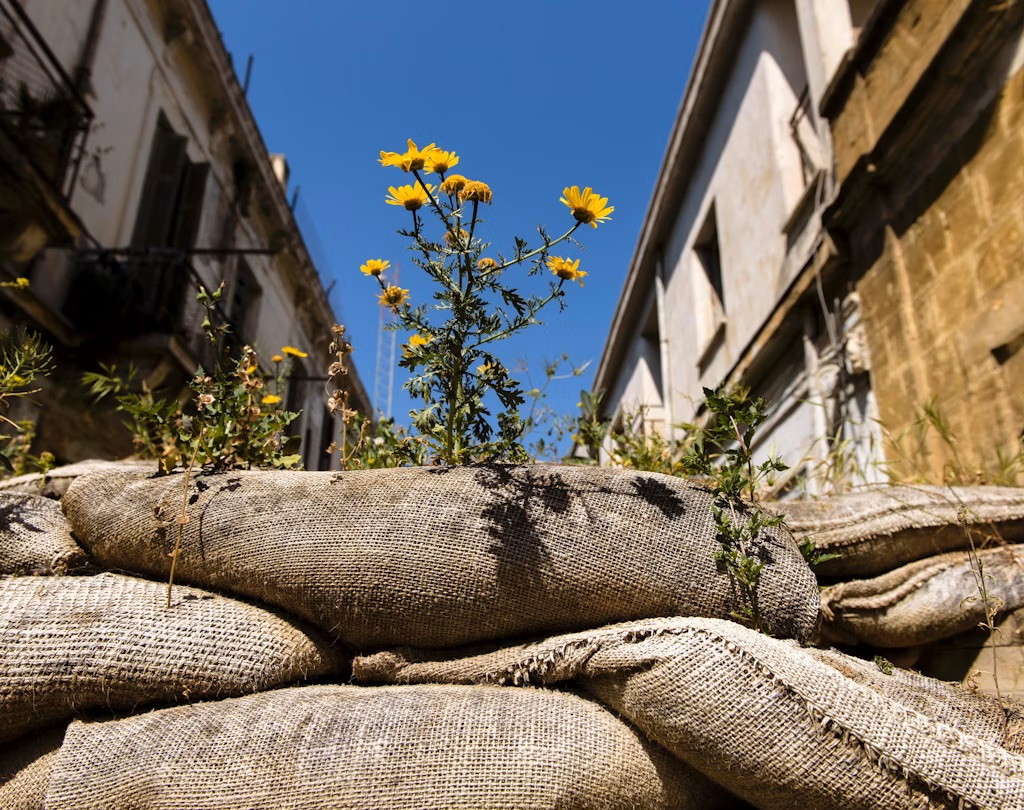
The Cyprus Question stands as one of the most intractable conflicts in modern Europe, a festering wound that has divided a small Mediterranean island for over half a century. This is not merely a tale of two peoples falling out; it is a profound examination of how colonial legacies, ethnic nationalism, and great power politics conspired to tear apart a society that had, for centuries, found ways to coexist. The story of Cyprus’s division reveals the terrible costs of allowing ideological extremism to triumph over pragmatic cooperation, and how the failures of democratic institutions can lead to the permanent fracturing of a nation.
The Ottoman Legacy: Seeds of Division
To understand the Cyprus Question, one must begin with the Ottoman conquest of 1571. When the Ottoman Empire seized Cyprus from the Venetians, they inherited a predominantly Greek Orthodox population and set about establishing their characteristic millet system. Under Ottoman rule, religious communities were granted considerable autonomy in managing their internal affairs, with the Greek Orthodox Church maintaining its institutional structure whilst Turkish settlers arrived to establish their own community.
The Ottoman period was characterised by what historians describe as a “relatively easy coexistence” between the religious majority Orthodox Greeks and the growing Muslim minority. This coexistence was not built on modern notions of equality, but rather on the pragmatic Ottoman approach of allowing religious communities to govern themselves whilst paying tribute to the central authority. The millet system created parallel institutions – separate education systems, religious courts, and community leadership structures – that would prove to be the foundation stones of later ethnic division.
During these three centuries of Ottoman rule, both Greek and Turkish Cypriots developed deep roots in the island’s soil. Turkish settlers, numbering approximately 30,000 after the conquest, were granted land, whilst some local Christians converted to Islam. By the end of Ottoman rule, the island had developed distinct but overlapping communities, each with their own religious institutions, customs, and connections to their respective “motherlands”. The Greek Orthodox Church, in particular, had evolved into far more than a religious institution – it had become the primary vehicle for preserving Greek identity and culture under Ottoman rule.
What is crucial to understand is that this communal separation was not yet the rigid ethnic nationalism that would later tear the island apart. Communities might have been distinct, but they were not mutually exclusive. Greek and Turkish Cypriots shared villages, traded together, and had developed their own Cypriot dialects that reflected centuries of interaction. The seeds of division were planted in the institutional structures of the millet system, but they had not yet grown into the poisonous tree of ethnic hatred.
British Rule: Divide and Conquer
The arrival of the British in 1878 marked the beginning of the end for intercommunal harmony in Cyprus. The British did not create the communal divisions on the island, but they systematically exploited and intensified them for their own imperial purposes. This was classic divide-and-rule tactics, executed with ruthless efficiency and devastating long-term consequences.
From the very moment of British arrival, the colonial administration was confronted with the reality of Greek Cypriot aspirations for enosis – union with Greece. The Bishop of Kition’s welcoming address to the first British High Commissioner in 1878 explicitly expressed the hope that Britain would “expedite the unification of Cyprus and Greece as they had previously done with the Ionian Islands”. This was not mere rhetoric; it was a fundamental political demand that would shape the next eight decades of Cypriot history.
The British response was calculated and divisive. Rather than seeking to build a unified Cypriot identity, they deliberately favoured Turkish Cypriots as a counterweight to Greek Cypriot nationalism. Turkish Cypriots were given disproportionate representation in the Legislative Council, their traditional institutions were strengthened, and they were increasingly recruited into the colonial police force. Meanwhile, Greek Cypriot institutions, particularly the Orthodox Church, were systematically undermined and controlled.
The infamous Cyprus Tribute epitomised the exploitative nature of British rule. The British extracted 92,799 pounds sterling annually from the island’s meagre resources, ostensibly to pay the Sultan but actually to service Turkish debts to British banks. This tribute became “a symbol of British oppression” and a constant source of resentment amongst all Cypriots. Even Winston Churchill, visiting as Undersecretary of State for the Colonies in 1907, declared: “We have no right, except by force majeure, to take a penny of the Cyprus Tribute”.
The British also maintained and intensified the Ottoman-era separation of communities. Separate education systems, segregated institutions, and distinct legal frameworks were not just preserved but actively reinforced. The colonial administration’s census of 1881 revealed a population of 186,173, with 137,631 Greeks (73.9%), 45,438 Turks (24.4%), and 3,084 others (1.7%). These figures would become weapons in the battle for political representation and community rights.
By the 1920s, the British had formalised their colonial control by declaring Cyprus a Crown Colony in 1925. This move was largely symbolic, as it did not address the fundamental political grievances of either community. Instead, it reinforced the colonial framework that kept Cypriots divided and dependent on British authority for resolution of their disputes.
The Rise of Competing Nationalisms
The interwar period saw the crystallisation of the two competing nationalisms that would ultimately destroy the possibility of a unified Cyprus. Greek Cypriot nationalism, centred on the dream of enosis, became increasingly organised and militant. Turkish Cypriot nationalism, responding to the threat of Greek absorption, coalesced around the counter-ideology of taksim – partition.
The enosis movement was not merely a political preference; it was a deeply held conviction that Cyprus’s natural destiny lay in union with Greece. The Greek Orthodox Church served as the primary vehicle for this nationalism, with the Archbishop traditionally serving as the ethnarch – the political as well as religious leader of the Greek Cypriot community. By the 1940s, both the political right and left in the Greek Cypriot community had embraced enosis as their central objective.
Turkish Cypriot nationalism developed primarily as a defensive response to Greek nationalism. The spectre of what had happened to the Cretan Turks – forced to flee after Crete’s union with Greece – haunted Turkish Cypriot thinking. Initially, Turkish Cypriots had favoured continued British rule, but as the prospect of enosis became more real, they embraced taksim as their own solution. The slogan “Partition or Death” became a rallying cry in Turkish Cypriot politics from the late 1950s onwards.
The emergence of these competing nationalisms was facilitated by the institutional structures that had been preserved and strengthened under British rule. Separate education systems meant that Greek and Turkish Cypriot children were educated in different languages, learned different histories, and absorbed different national myths. Separate newspapers, separate cultural organisations, and separate political movements meant that the two communities increasingly lived parallel lives.
The 1950s saw the rise of extremist organisations that would push intercommunal tensions to the breaking point. EOKA (National Organisation of Cypriot Fighters) launched its campaign in 1955, combining anti-British terrorism with the goal of achieving enosis. Led by George Grivas and blessed by Archbishop Makarios, EOKA represented the militarisation of Greek Cypriot nationalism. The organisation’s ideology was explicitly right-wing, anti-communist, and religiously conservative.
The Turkish response came in the form of TMT (Turkish Resistance Organisation), formed in 1958 to counter EOKA’s activities. TMT’s primary goal was to prevent enosis and promote taksim. The organisation was supported by the Turkish government and represented the militarisation of Turkish Cypriot nationalism. Like EOKA, TMT was prepared to use violence to achieve its political objectives.
The escalation of violence in 1958 marked a point of no return in intercommunal relations. Between June and August 1958, there were approximately 55 assassinations by Turks against Greeks and 59 assassinations by Greeks against Turks. A substantial number of Turkish Cypriots were displaced from mixed villages during this period. The fabric of intercommunal coexistence, already frayed by decades of colonial manipulation, was finally torn apart by ethnic violence.
Independence and Constitutional Crisis
The Zurich and London Agreements of 1959 represented an attempt to square the circle of Cypriot politics – to create an independent state whilst preventing both enosis and taksim. The agreements were negotiated between Greece and Turkey, with Britain’s consent, and then presented to the Cypriot communities as a fait accompli. This was not democratic self-determination; it was a solution imposed by external powers to serve their own interests.
The 1960 Constitution that emerged from these agreements was a monument to the failure of political imagination. Rather than creating a unified Cypriot state, it institutionalised ethnic division through an elaborate system of checks and balances. The constitution recognised two communities – Greek and Turkish – and granted them equal treatment despite their numerical disparity. The president was to be a Greek Cypriot, the vice-president a Turkish Cypriot, and both were granted veto powers over crucial decisions.
The bicommunal nature of the constitution extended throughout the state structure. The civil service was to be staffed on a 70-30 ratio between Greek and Turkish Cypriots, the army on a 60-40 ratio, and separate municipalities were to be established in the five largest towns. The constitution also prohibited both enosis and taksim, and granted Greece, Turkey, and Britain the right to intervene to maintain the constitutional order.
From the outset, the constitution was viewed with suspicion by both communities. Many Greek Cypriots saw it as an illegitimate imposition that prevented their natural right to self-determination. They particularly resented the veto powers granted to the Turkish Cypriot minority, which they viewed as disproportionate to their numbers. Turkish Cypriots, whilst accepting the constitutional arrangements, remained deeply suspicious of Greek Cypriot intentions and determined to preserve their constitutional protections.
The constitutional arrangements proved unworkable in practice. Disputes arose over the implementation of the communal ratios in the civil service and army. The Turkish Cypriot vice-president, Fazil Küçük, used his veto power to block the creation of an integrated army, fearing Greek Cypriot domination. Greek Cypriots complained that the constitutional provisions were being used to paralyse government rather than facilitate cooperation.
The most contentious issue was the question of separate municipalities. Turkish Cypriots were determined to maintain separate municipal administrations in the five largest towns, whilst Greek Cypriots viewed this as an unacceptable form of segregation. The inability to resolve this issue symbolised the deeper problem: the constitution had created a framework for division rather than unity.
The Breakdown of 1963
By late 1963, President Makarios had concluded that the constitutional arrangements were unworkable. On 30th November 1963, he proposed thirteen constitutional amendments designed to remove what he termed the obstacles that “threatened to paralyse the State machinery”. The amendments would have eliminated most of the special protections for Turkish Cypriots, including the veto powers, separate municipalities, and communal ratios.
The thirteen-point proposal was presented as a technical adjustment to improve governmental efficiency, but it was actually a fundamental restructuring of the constitutional order. The amendments would have transformed Cyprus from a bicommunal state into a unitary state with limited minority protections. For Turkish Cypriots, this represented the first step towards the eventual absorption of Cyprus into Greece.
The Turkish government rejected the proposals outright, viewing them as a violation of the international agreements that had created the Cypriot state. Turkish Cypriots, led by Vice-President Küçük, also rejected the amendments and accused Makarios of attempting to destroy the constitutional order. The stage was set for the final breakdown of the power-sharing arrangement.
On 21st December 1963, intercommunal violence erupted in Nicosia and quickly spread across the island. The events of “Bloody Christmas” resulted in the deaths of 364 Turkish Cypriots and 174 Greek Cypriots, and the displacement of 25,000 Turkish Cypriots. The violence was not random; it was the result of organised attacks that reflected the deep communal divisions that had been building for decades.
The breakdown of the constitutional order was swift and decisive. Turkish Cypriots withdrew from the government, either voluntarily or under duress. The power-sharing arrangements collapsed, and the Greek Cypriot-led administration claimed to represent the legitimate government of the Republic of Cyprus. Turkish Cypriots retreated into armed enclaves, protected by the newly formed Turkish Cypriot militia.
The international community’s response was to deploy peacekeepers rather than to address the underlying causes of the conflict. The United Nations Peacekeeping Force in Cyprus (UNFICYP) was established in March 1964 to maintain the ceasefire and facilitate a return to normal conditions. Over sixty years later, UNFICYP remains in Cyprus, a testament to the failure to resolve the underlying political problems.
International Involvement and the Path to Division
The collapse of the constitutional order in 1963 internationalised the Cyprus Question in ways that would prove devastating for the island’s future. Greece and Turkey, as guarantor powers under the 1960 treaties, became directly involved in the conflict. Rather than seeking to mediate between the communities, both powers pursued their own national interests, further polarising the situation.
Greece’s involvement was characterised by covert military support for Greek Cypriot extremists and attempts to control President Makarios. The Greek government established a policy of achieving enosis through destabilisation and pressure. After the military coup in Greece in 1967, the junta became increasingly frustrated with Makarios’s independent stance and began planning his removal.
Turkey’s response was to support Turkish Cypriot resistance and to threaten military intervention. The Turkish government viewed the breakdown of the constitutional order as justification for its own intervention under the Treaty of Guarantee. Turkish military planning for an invasion of Cyprus began in the mid-1960s, with contingency plans regularly updated.
The period from 1963 to 1974 saw the gradual militarisation of both communities. Greek Cypriots formed the National Guard, which was trained and equipped by Greece. Turkish Cypriots, confined to enclaves, formed their own militia forces with Turkish support. The island became an armed camp, with both communities preparing for the final confrontation.
The role of the great powers – Britain, the United States, and the Soviet Union – was largely passive during this period. Britain, despite its obligations under the Treaty of Guarantee, was primarily concerned with maintaining its military bases rather than resolving the political conflict. The United States, preoccupied with the Cold War, sought to prevent a war between NATO allies Greece and Turkey. The Soviet Union, excluded from the original agreements, could only observe from the sidelines.
The 1974 Catastrophe
The final act of the tragedy began on 15th July 1974, when the Greek military junta staged a coup against President Makarios. The coup was led by the Cypriot National Guard, in collaboration with EOKA B, and aimed to achieve enosis through the installation of a puppet government. Nikos Sampson, a former EOKA gunman with a notorious reputation for violence against Turkish Cypriots, was installed as president.
The coup was a desperate gamble by the Greek junta to achieve through violence what they had failed to achieve through politics. The junta’s leader, Dimitrios Ioannidis, had become convinced that Makarios was no longer a reliable ally in the struggle for enosis. The decision to remove Makarios and install Sampson was designed to provoke a Turkish reaction that would justify direct Greek intervention.
The Turkish response was swift and decisive. On 20th July 1974, 40,000 Turkish troops invaded Cyprus under the code name “Operation Attila”. The invasion began at dawn with landings near Kyrenia and air attacks on Nicosia. The Turkish government justified the invasion as a “peaceful intervention” to restore the constitutional order, but the military operation was clearly designed to achieve taksim.
The Greek Cypriot response was tragically inadequate. The National Guard, numbering about 12,000 men, was caught unprepared and lacked air support. The Greek government, paralysed by the collapse of the junta, was unable to provide effective assistance. Within days, Turkish forces had established a bridgehead and begun the process of dividing the island.
The human cost of the 1974 events was catastrophic. The invasion resulted in the displacement of 170,000 Greek Cypriots from the north and 50,000 Turkish Cypriots from the south. Both communities moved because they feared further violence, creating a refugee crisis that would last for generations. The psychological trauma of displacement affected entire communities and created lasting bitterness between the two peoples.
The Turkish invasion also resulted in significant casualties on all sides. Turkish forces suffered approximately 1,500-3,500 casualties, whilst Greek Cypriot and Greek forces lost 4,500-6,000 people. Hundreds of civilians were killed, and over 1,000 people went missing and remain unaccounted for. The UN peacekeeping force also suffered casualties, with 9 killed and 65 wounded.
The Permanent Division
The events of 1974 created the de facto partition of Cyprus that persists to this day. Turkey occupied approximately 37% of the island, establishing a Turkish Cypriot administration in the north. The Republic of Cyprus, controlled by Greek Cypriots, retained control of the south. A UN buffer zone, patrolled by UNFICYP, was established to separate the two sides.
The division was not merely territorial; it was also demographic and cultural. The population movements of 1974 created ethnically homogeneous zones for the first time in Cyprus’s history. Greek Cypriots became concentrated in the south, Turkish Cypriots in the north, ending centuries of mixed settlement. The buffer zone became a physical barrier that prevented contact between the communities.
The international community’s response to the division was to condemn the Turkish invasion whilst recognising the Greek Cypriot government as the legitimate authority for the whole island. UN Security Council resolutions called for the withdrawal of Turkish forces and the return of refugees, but these calls were ignored. The division of Cyprus became a frozen conflict, with neither side willing to make the compromises necessary for reunification.
The 1983 declaration of the Turkish Republic of Northern Cyprus (TRNC) formalised the division. The TRNC, recognised only by Turkey, claimed to be the legitimate government of Turkish Cypriots. The international community rejected this claim, maintaining that the Republic of Cyprus was the only legitimate government of the island. The division was now not just de facto but also de jure from the Turkish Cypriot perspective.
The Colonial Legacy Lives On
The Cyprus Question cannot be understood without recognising the central role of colonial legacy in creating the conditions for division. The British colonial administration’s policy of divide and rule created the institutional framework that made ethnic conflict inevitable. The millet system, maintained and intensified under British rule, created parallel societies that had little contact with each other.
The educational system was perhaps the most crucial element in this process of division. Separate Greek and Turkish schools, using different languages and teaching different histories, created generations of Cypriots who viewed each other as foreign. The absence of common educational experiences meant that Greek and Turkish Cypriots grew up with fundamentally different worldviews.
The role of the mother countries – Greece and Turkey – was equally destructive. Both countries viewed Cyprus through the lens of their own national interests rather than the welfare of Cypriots. Greek policy was dominated by the dream of megali idea – the great idea of recreating the Byzantine Empire. Turkish policy was driven by strategic concerns about Greek expansion and the security of the Turkish mainland.
The failure of the international community to address the underlying causes of the conflict allowed the division to become permanent. The deployment of peacekeepers maintained the ceasefire but did not address the political problems that had caused the conflict. The frozen conflict became a convenient solution for the great powers, who could avoid the difficult decisions necessary for reunification.
The Tragedy of Division
The Cyprus Question represents one of the most complete failures of post-colonial state-building in the modern world. A society that had found ways to coexist for centuries was torn apart by the toxic combination of ethnic nationalism, great power rivalry, and colonial manipulation. The division of Cyprus stands as a monument to the terrible costs of allowing extremism to triumph over moderation, and ideology to override pragmatism.
The roots of the Cyprus Question lie deep in the colonial period, when British administrators deliberately exploited and intensified communal divisions for their own imperial purposes. The millet system, maintained and strengthened under British rule, created the institutional framework for ethnic conflict. The rise of competing nationalisms – Greek Cypriot enosis and Turkish Cypriot taksim – made compromise increasingly difficult and violence increasingly likely.
The 1960 Constitution, rather than creating a unified Cypriot state, institutionalised division through its elaborate bicommunal arrangements. The breakdown of the constitutional order in 1963 led to intercommunal violence and the withdrawal of Turkish Cypriots from the government. The period from 1963 to 1974 saw the gradual militarisation of both communities and the increasing involvement of Greece and Turkey in the conflict.
The 1974 coup and Turkish invasion represented the final collapse of the Cypriot state. The human cost was enormous – thousands killed, hundreds of thousands displaced, and an entire society traumatised by violence. The division of the island created ethnically homogeneous zones and made the Cyprus Question an international problem rather than a domestic issue.
The legacy of 1974 continues to shape Cyprus today. The island remains divided, with a UN buffer zone separating the two communities. Attempts at reunification have failed, and the division has become increasingly entrenched. The Turkish Republic of Northern Cyprus, recognised only by Turkey, claims to represent the legitimate aspirations of Turkish Cypriots, whilst the Republic of Cyprus, recognised internationally, claims sovereignty over the entire island.
The Cyprus Question stands as a warning about the dangers of ethnic nationalism and the importance of building inclusive democratic institutions. It demonstrates how colonial legacies can poison post-independence politics and how the failure to address underlying grievances can lead to permanent division. Most importantly, it shows how the dreams of ethnic purity can destroy the reality of multicultural coexistence.
The divided island of Cyprus remains a testimony to the human capacity for both cooperation and conflict. For centuries, Greek and Turkish Cypriots found ways to live together, sharing villages, trading goods, and building a common life. The tragedy of the Cyprus Question is not that division was inevitable, but that it was chosen by political leaders who preferred the certainties of ethnic nationalism to the complexities of democratic compromise. The roots of division planted in the colonial period grew into the tree of conflict that still shadows the island today.
Bob Lynn | © 2025 Vox Meditantis. All rights reserved.

 Vox Meditantis
Leave a comment