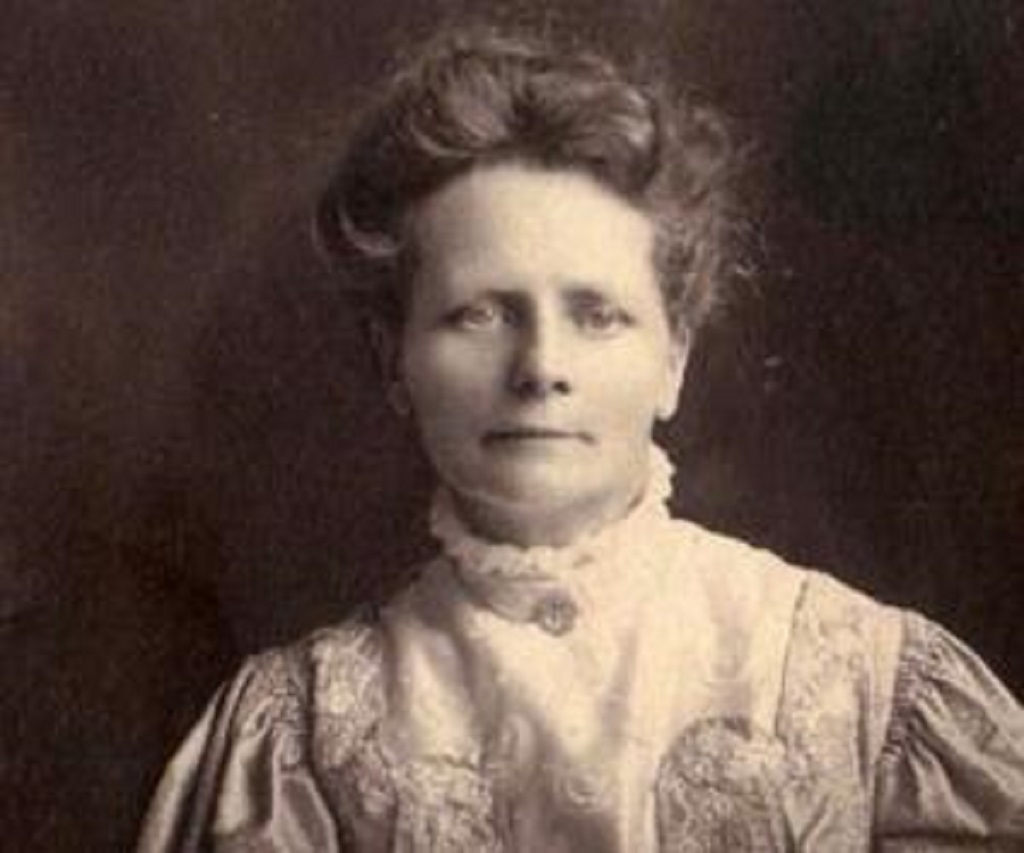
The credit that should have been hers was stolen by her husband. The position that should have followed his death was denied because she was a woman. Yet Maria Margaretha Kirch’s contributions to astronomy burned as bright as the comet she discovered – and her legacy endures as a reminder of the injustices that have systematically erased women from scientific history.
A Mind Forged Against the Odds
Maria Margaretha Winckelmann was born in 1670 in Panitzsch, near Leipzig, into circumstances that might have condemned most women of her era to intellectual obscurity. Instead, her father – a Lutheran minister with revolutionary ideas about education – insisted his daughter deserved the same learning opportunities as any boy. This was not merely progressive thinking; it was radical defiance of social convention.
When her parents died before she turned thirteen, Maria’s education continued under her brother-in-law and, crucially, with Christoph Arnold, a renowned self-taught astronomer in nearby Sommerfeld. Arnold had made his reputation observing the comet of 1683 and the transit of Mercury in 1690 – achievements that earned him tax exemption for life from the impressed Leipzig Council. Here was a girl learning from one of the finest astronomical minds of the age, preparing for a career that society insisted she could never have.
Through Arnold, Maria met Gottfried Kirch in 1692 – a mathematician and astronomer thirty years her senior who had studied under the legendary Johannes Hevelius. When they married, it created more than a personal union; it forged one of history’s most productive astronomical partnerships. Yet from the outset, Maria was cast as the “unofficial assistant” to her husband, despite their work being genuinely collaborative.
A Partnership of Equals Masquerading as Hierarchy
The couple’s work was methodical and vital. They produced calendars and ephemerides – documents showing the positions of celestial bodies – that were sold by the Royal Academy of Sciences in Berlin. These weren’t mere academic exercises; they provided essential information for navigation, agriculture, and daily life, including moon phases, sunrise and sunset times, eclipses, and planetary positions.
Their observational technique reveals the true nature of their partnership. Sometimes they would divide the labour by viewing different parts of the sky – he observing the north whilst she took the south. Other times they would alternate nights, with one watching whilst the other slept. Maria typically began her observations at nine o’clock in the evening, systematically sweeping the heavens with the dedication of a true scientist.
In 1700, when Gottfried was appointed royal astronomer by Frederick III of Brandenburg, the family moved to Berlin where a new observatory was being constructed. For eleven years, until the observatory’s completion in 1711, they worked from their home and from the private observatory of Baron von Krosigk. It was during this period that Maria would make the discovery that should have secured her place in history.
The Discovery That Changed Everything
On the night of 21st April 1702, Maria was conducting her routine observations, hoping to locate a variable star her husband had found the previous evening. As she positioned her telescope and peered through the lens, something caught her peripheral vision – a fuzzy smudge of light that shouldn’t have been there. She repositioned the telescope for a closer look. It was a comet.
She immediately woke Gottfried to confirm her discovery. By the next day, he had written a report to King Leopold I describing the celestial newcomer. But Maria’s name was absent from that report. The discovery was attributed to Gottfried Kirch, despite the truth being that his wife had made the observation that would become known as the Comet of 1702 (C/1702 H1).
Two other astronomers in Rome – Francesco Bianchini and Giacomo Filippo Maraldi – had independently discovered the same comet just hours before Maria. Technically, this makes her a co-discoverer rather than the sole discoverer. But the shameful reality is that even today, more than three centuries later, reference works continue to credit the discovery to Gottfried rather than Maria. As recently as 1999, the scholarly work Cometography: Volume 1, Ancient-1799 attributed the discovery to the two Roman astronomers and Gottfried Kirch – not a word about Maria.
This systematic erasure represents more than historical oversight; it’s institutional theft of intellectual achievement. The convention of naming comets after their discoverers means Maria should have been immortalised in the stars. Instead, her contribution was buried beneath layers of 18th-century sexism and academic prejudice.
The Long-Delayed Confession
It wasn’t until 1710 – eight years after the discovery and just before his death – that Gottfried finally admitted the truth in the first journal of the Berlin Academy of Sciences. Even then, the acknowledgement came too late to restore proper credit. The comet was never renamed to reflect Maria’s discovery, leaving her achievement officially unrecognised to this day.
Why did Gottfried claim credit for his wife’s work? Some speculate he feared ridicule if people learned the truth. Others suggest Maria herself couldn’t stake her claim because she published only in German, whilst scholarly publications like Acta Eruditorum were composed in Latin. These explanations, however well-intentioned, miss the fundamental point: Maria was denied recognition because she was a woman in a world that refused to acknowledge women as legitimate scientific actors.
A Career in Her Own Right
Despite this setback, Maria refused to retreat into obscurity. She continued her astronomical work and began publishing under her own name. Her 1707 observations of the aurora borealis provided valuable data about these northern lights. In 1709, she published Von der Conjunction der Sonne des Saturni und der Venus, examining the conjunction of the sun with Saturn and Venus. This work, along with her predictions about the approaching conjunction of Jupiter and Saturn in 1712, represented substantial contributions to astronomical understanding.
These publications placed Maria in a delicate position. Astronomy and astrology remained closely linked in the early 18th century, and planetary conjunctions were of intense public interest. Critics claimed her work leaned too heavily toward astrology, but as Alphonse des Vignoles, president of the Berlin Academy, noted in her eulogy: “Madame Kirch prepared horoscopes at the request of her friends, but always against her will and in order not to be unkind to her patrons”.
The distinction reveals the impossible balance Maria had to strike. To earn recognition and income, she had to cater to popular interests in astrological predictions. Yet this very accommodation was then used to dismiss her legitimate astronomical contributions. It was a no-win situation designed to keep women on the margins of serious scientific discourse.
The Weather Diaries: An Unsung Scientific Legacy
Beyond her astronomical discoveries, Maria maintained detailed weather observations that constitute one of Germany’s oldest and most valuable meteorological records. Starting in 1700 in Berlin, she recorded daily observations that included temperature measurements and weather conditions. These diaries, continued after her death by her children, span nearly a century and provide crucial data for understanding historical climate patterns.
The instrumental measurements from Maria’s weather diaries represent the oldest part of Germany’s longest temperature series. The pressure data from these records has proven reliable for quantitative analysis, whilst the temperature data remains valuable for qualitative assessments of historical weather patterns. This systematic, decades-long commitment to data collection demonstrates Maria’s understanding of the importance of long-term scientific observation – a contribution that modern climate researchers still rely upon.
The Academy’s Rejection: Institutional Sexism Laid Bare
When Gottfried died in 1710, Maria faced an immediate financial crisis. She petitioned the Royal Berlin Academy of Sciences for eighteen months, requesting permission to continue as assistant astronomer and calendar maker. Her qualifications were unquestionable – during Gottfried’s illness, she had single-handedly maintained the work that generated income for both the family and the Academy.
The Academy’s response was as predictable as it was appalling. They refused her request outright, explicitly stating that women could not hold official positions. The Academy, “fearful of setting a precedent by hiring a woman for such an important position,” allowed her six months’ housing and salary before cutting her off. In what reads like mockery disguised as conciliation, they presented her with a medal in 1711.
This decision wasn’t about competence – it was about power. The Academy recognised Maria’s abilities but refused to legitimise them with official appointment. They were content to benefit from her work whilst denying her the recognition and security that should have accompanied it. The hypocrisy is breathtaking: an institution dedicated to the advancement of knowledge deliberately suppressing one of its most capable practitioners because of her gender.
The Continuing Struggle and Final Years
Maria’s financial difficulties forced her to seek alternative arrangements. In 1712, she moved to the house of Baron von Krosigk, an amateur astronomer who provided her with observatory access. She observed there for two years, though without access to a thermometer for her weather measurements. In 1714, facing continued hardship, she moved to Gdansk with her children.
The family’s fortunes improved in 1716 when Maria’s son Christfried was appointed director of the Berlin Observatory. Maria returned to Berlin and resumed her observations from the Astronomenhaus, continuing her weather measurements until shortly before her death on 29th December 1720.
Even in these final years, Maria faced institutional resistance. In 1717, the Academy reprimanded her for being “too prominent” in observatory life. When she refused to reduce her involvement, she faced the threat of expulsion from her observatory quarters. The message was clear: women could assist and observe, but they must never presume to lead or claim equal status.
A Dynasty of Scientific Excellence
Maria’s greatest legacy may be the astronomical dynasty she established. Her children – Christfried, Christine, and Margaretha – all became accomplished astronomers. This wasn’t accidental; Maria deliberately trained them in astronomical observation and calculation from childhood.
Christine Kirch continued the family’s work for decades after her mother’s death, maintaining weather observations until 1774 and continuing calendar production. She received recognition from the Academy that had been denied to her mother, eventually earning a respectable salary of 400 Thaler for her work on the Silesia calendar. Margaretha Kirch contributed significant observations, including detailed drawings of the comet tail splitting in 1743.
The longevity and productivity of this astronomical family – spanning nearly a century of observations – demonstrates Maria’s profound impact on scientific practice. She didn’t merely conduct research; she created a tradition of systematic observation and data collection that enriched human understanding of the natural world.
The Broader Context: Women and 18th-Century Science
Maria’s struggles weren’t unique but representative of systematic barriers facing women throughout the Scientific Revolution. Universities barred women from enrolment, scientific societies excluded them from membership, and the prevailing belief held that women lacked the intellectual capacity for serious scientific work. Those few women who managed to pursue scientific knowledge typically did so through family connections to male scientists, working in domestic environments where their contributions could be controlled and minimised.
The pattern was consistent across Europe: women could assist, calculate, and observe, but they could not lead, publish independently, or claim equal status with their male counterparts. The exceptions – women like Maria who broke through these barriers – faced constant pressure to minimise their achievements and defer to male authority.
Justice Delayed, Recognition Denied
More than three centuries after Maria’s comet discovery, the injustice persists. Modern astronomy textbooks and popular science accounts routinely identify Caroline Herschel as the first woman to discover a comet. Herschel made her first cometary discovery on 1st August 1786 – eighty-four years after Maria’s discovery. Whilst Herschel’s achievements deserve celebration, the continued erasure of Maria’s priority represents ongoing historical negligence.
This isn’t merely academic pedantry. When we misremember history, we perpetuate the very injustices that created these erasures in the first place. Every time someone claims Herschel was first, they participate in the systematic marginalisation that denied Maria recognition during her lifetime. The correction isn’t about diminishing Herschel’s achievements; it’s about ensuring that pioneering women receive the credit they earned.
The Light She Gave
Maria Margaretha Kirch’s story illuminates the price of being first when society refuses to acknowledge your achievements. She discovered a comet that bears another’s name, conducted research that enhanced human knowledge, and trained a generation of astronomers who continued her work. Yet she faced financial hardship, institutional rejection, and systematic erasure of her contributions.
The tragedy isn’t simply that Maria was overlooked; it’s that her experience represents countless other women whose scientific contributions have been forgotten, minimised, or attributed to male colleagues. How many discoveries were stolen? How many careers were ended by institutional prejudice? How much scientific progress was lost because half of humanity was excluded from formal participation?
Maria’s legacy demands more than belated recognition. It requires honest acknowledgement of the institutional failures that created these injustices and continued vigilance against the biases that perpetuate them. Her comet may not bear her name, but her example burns bright as a reminder that scientific truth transcends the prejudices of those who would suppress it.
The stars Maria observed are still there, indifferent to the human dramas played out beneath them. But the knowledge she gained, the methods she pioneered, and the family tradition she established contributed to humanity’s growing understanding of the cosmos. That contribution deserves recognition, respect, and the justice that was denied to her in life.
In celebrating Maria Margaretha Kirch, we don’t merely honour one overlooked astronomer. We confront the systematic inequities that have impoverished our understanding of scientific history and commit ourselves to ensuring that future pioneers, regardless of gender, receive the recognition their achievements deserve. That would be a legacy worthy of the first woman to discover a comet – whether history books remember her or not.
Bob Lynn | © 2025 Vox Meditantis. All rights reserved.

 Vox Meditantis
Leave a comment