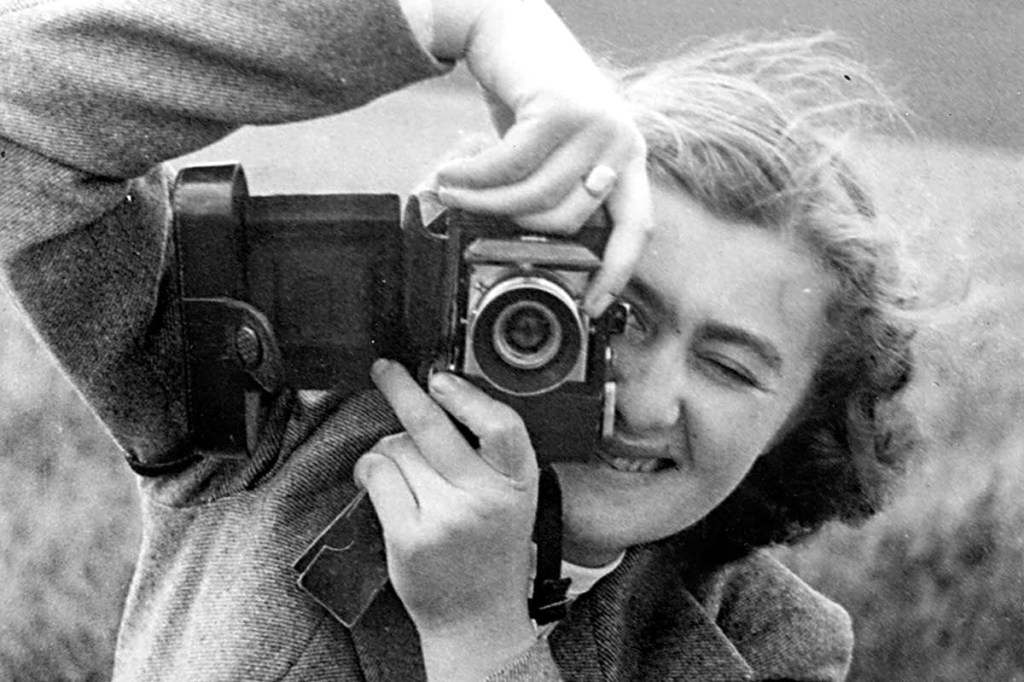
When the world watched in disbelief as a novel coronavirus swept across continents in 2020, few knew that a working-class woman from Glasgow had first peered into the heart of these viral mysteries nearly six decades earlier. June Dalziel Almeida stands as one of science’s most overlooked pioneers – a school dropout whose revolutionary techniques for visualising viruses transformed modern virology and laid the groundwork for our understanding of diseases that would later devastate humanity.
Her story epitomises the systemic barriers that have kept brilliant minds from recognition, not because they lacked talent, but because they lacked the right credentials – a PhD, university connections, the institutional approval that traditionally opens doors in academic circles. Yet it was precisely this outsider status that perhaps freed Almeida to see what others could not, to innovate where established minds might have been constrained by conventional thinking.
Humble Beginnings in Industrial Glasgow
Born on 5th October 1930 in a second-floor tenement flat at 10 Duntroon Street, Glasgow, June Hart entered a world shaped by economic hardship and limited opportunities. Her father, Harry Leonard Hart, drove buses through the city’s industrial landscape, whilst her mother, Jane Dalziel Steven, worked as a shop assistant. The family’s circumstances became even more challenging when June’s six-year-old brother died of diphtheria in 1940 – a tragedy that may well have sparked her lifelong fascination with understanding infectious disease.
Despite these obstacles, June excelled academically at Whitehill Senior Secondary School, where she studied Latin and Greek alongside her beloved science subjects. She was, by all accounts, a brilliant student with university ambitions – the kind of young person who should have been nurtured by the educational system. Instead, she won the school science prize in 1947 and was promptly forced to leave education behind.
The harsh reality was brutally simple: nobody in her family’s circle had ever attended university, and they certainly couldn’t afford it. At just 16 years old, June traded her academic dreams for economic necessity, taking a position as a histopathology technician at Glasgow Royal Infirmary in 1947. It was a devastating compromise that would have crushed lesser spirits, yet it became the foundation upon which she would build her extraordinary career.
The Canadian Breakthrough
After marrying Venezuelan artist Enriques Rosalio Almeida in 1954, June made the pivotal decision to emigrate to Canada. This move proved transformational – in Canada’s less rigid academic environment, practical skills and demonstrable ability carried more weight than formal qualifications. At the Ontario Cancer Institute in Toronto, she found her calling as an electron microscopy technician.
Here, away from the stifling class consciousness of Britain, June began to flourish. She developed what would become her signature innovation: negative staining techniques that revolutionised virus identification. The principle was elegantly simple yet groundbreaking – by using heavy metals like phosphotungstic acid to create contrast, she could make viral particles stand out clearly against their background, revealing structures that had previously been invisible or indistinguishable.
This wasn’t merely technical improvement; it was scientific artistry. Where others saw blurry, indistinct shapes that might or might not be viruses, Almeida created crisp, detailed images that could definitively identify viral particles. Her work began appearing in prestigious scientific journals, and despite having no formal higher education, she was building an international reputation based purely on the quality of her research.
The Immune Electron Microscopy Revolution
Almeida’s next innovation proved even more significant. She pioneered immune electron microscopy (IEM), a technique that combined the specificity of antibodies with the resolution of electron microscopy. The method involved mixing virus samples with specific antibodies – immune proteins that would bind only to particular viruses – causing the viral particles to clump together and become much easier to identify.
This breakthrough solved one of virology’s most persistent problems: distinguishing between different types of viruses in mixed samples. Before Almeida’s technique, researchers often couldn’t tell whether they were looking at a new virus or simply a poor image of a known one. Her immune electron microscopy provided the specificity needed to make definitive identifications.
The technique’s impact was immediate and profound. Almeida used it to achieve the first visualisation of the rubella virus, despite the disease having been recognised for over 25 years. She applied the same methodology to identify components of hepatitis B, revealing that the virus had two distinct parts – a surface component and an internal core – a discovery that would prove crucial for vaccine development.
The Coronavirus Discovery That Changed Everything
In 1964, Almeida was recruited back to Britain by St Thomas’s Hospital Medical School in London, her reputation now sufficient to overcome her lack of formal qualifications. It was here that she would make the discovery that would eventually bring her belated recognition.
Dr David Tyrrell, director of the Common Cold Research Centre in Salisbury, was struggling with a mysterious sample designated B814 – a virus collected from a schoolboy in Surrey that caused common cold symptoms but refused to grow in conventional cell cultures. Traditional identification methods had failed completely. In desperation, Tyrrell sent the sample to Almeida, hoping her electron microscopy expertise might provide answers.
What Almeida saw through her microscope in 1964 was extraordinary: round, grey particles surrounded by a distinctive halo of club-shaped projections. The spike-like structures formed a crown-like appearance around each viral particle – an image reminiscent of the sun’s corona. She immediately recognised that this wasn’t just another influenza virus, as some had suggested, but something entirely new.
Even more remarkably, Almeida realised she had seen similar particles before while studying mouse hepatitis and chicken bronchitis viruses. When she had tried to publish these earlier observations, peer reviewers had dismissed her work, claiming she had simply produced “poor images of influenza virus particles”. Now, with the B814 sample providing confirmation, she and Tyrrell could prove these were indeed a new family of viruses.
Working with Tyrrell and Professor Tony Waterson, Almeida helped coin the term “coronavirus” in 1967. The name, derived from the Latin word for crown, perfectly captured the distinctive appearance these viruses presented under electron microscopy. Their findings were published in Nature in 1968, formally introducing the scientific community to this new viral family.
Beyond Coronaviruses: A Legacy of Discovery
The coronavirus discovery, whilst her most famous achievement, represents only one facet of Almeida’s contributions to virology. Her immune electron microscopy technique enabled researchers worldwide to identify and study numerous other viruses. She helped visualise hepatitis A and B viruses, contributed to early HIV research, and her methods were instrumental in identifying the Norwalk virus (now known as Norovirus), which causes widespread outbreaks of gastroenteritis.
Throughout her career at the Royal Postgraduate Medical School (later part of Imperial College School of Medicine), Almeida continued to refine and teach her techniques. She mentored Dr Albert Kapikian from the National Institutes of Health, passing on her immune electron microscopy methods, which he then used to identify small round viruses causing gastroenteritis outbreaks.
Despite her lack of formal education, the University of London eventually awarded her a Master of Philosophy degree in 1970 and a Doctor of Science in 1971, recognition based entirely on the merit of her published research. It was an extraordinary achievement – academic credentials earned not through coursework but through groundbreaking scientific contribution.
The Cruel Irony of Recognition
Perhaps the most damning indictment of how scientific institutions have historically treated working-class innovators lies in what happened to Almeida’s early coronavirus work. When she first observed coronavirus-like particles in animal samples, her research was rejected by peer reviewers who couldn’t conceive that a technician without proper credentials might be seeing something new. The established scientific community, locked in its assumptions about who could make meaningful discoveries, nearly cost humanity decades of coronavirus research.
This pattern of dismissal wasn’t unique to Almeida. The scientific establishment has a long history of overlooking contributions from those who lack traditional academic pedigree, particularly women from working-class backgrounds. What made Almeida’s case especially tragic was that her techniques were so obviously superior to existing methods – yet institutional bias initially prevented their recognition.
Even after her coronavirus discovery gained acceptance, Almeida remained largely unknown outside specialist virology circles. Her electron micrographs appeared in countless textbooks and research papers, but her name was often absent or relegated to footnotes. For decades, the woman who first visualised human coronaviruses worked in relative obscurity, her contributions known mainly to fellow researchers rather than the broader public.
Later Career and Personal Life
In 1972, Almeida moved to the Wellcome Research Laboratories, where she continued her pioneering work until retirement in 1985. Her first marriage to Enriques Almeida ended in divorce in 1967, but she found happiness again in 1982 when she married fellow virologist Professor Phillip Gardner. Gardner taught her immunofluorescence techniques, adding yet another tool to her already impressive technical arsenal.
After retirement, Almeida and Gardner settled in Bexhill-on-Sea, Sussex, where she enjoyed a quieter life until Gardner’s death in 1994. She had one daughter, Joyce, from her first marriage, who remained close to her throughout her life. Almeida returned to St Thomas’s Hospital as an advisor in her later years, helping to produce some of the first high-quality images of HIV, the virus that causes AIDS.
June Almeida died on 1st December 2007, aged 77, from a heart attack at her home in Bexhill-on-Sea. At the time of her death, outside virology circles, few knew her name or understood the magnitude of her contributions to human health.
The COVID-19 Awakening
The COVID-19 pandemic, caused by SARS-CoV-2 – a coronavirus – finally brought June Almeida the recognition she deserved. As the world battled with a disease caused by the very type of virus she had first identified in 1964, journalists, scientists, and the public began to discover her remarkable story.
The irony is profound: the techniques Almeida developed in the 1960s proved essential for rapidly identifying and studying SARS-CoV-2. Researchers fighting the pandemic were using methods she had pioneered decades earlier, yet her name had been largely forgotten. The crisis that brought coronavirus research to global prominence also illuminated how history has systematically overlooked the contributions of women, particularly those from working-class backgrounds.
This belated recognition has led to various tributes. The Royal Society of Edinburgh now awards the June Almeida Medal for outstanding contribution and achievement in public service and public engagement by early career researchers. Glasgow technology company AND Digital named their new office the June Almeida Club, acknowledging her as a local pioneer whose work continues to shape the future.
A Broader Indictment
June Almeida’s story represents more than individual triumph over adversity – it exposes the systematic failure of our institutions to recognise and nurture talent regardless of class background. How many other brilliant minds have been lost because they lacked the right connections, the proper accent, or the financial means to pursue formal education?
The scientific establishment’s initial dismissal of Almeida’s coronavirus observations wasn’t merely an innocent mistake – it reflected deeply embedded assumptions about who has the right to make important discoveries. The peer reviewers who rejected her early work weren’t evaluating the science; they were making judgements about the scientist.
This institutional bias has real consequences. Had Almeida’s early coronavirus research been taken seriously from the start, humanity might have been better prepared for SARS, MERS, and COVID-19. Instead, decades of potential research time were lost because the scientific community couldn’t see past its own prejudices.
Seeing the Invisible
Today, June Almeida’s electron micrographs still appear in virology textbooks worldwide. Her techniques remain fundamental to virus identification and research. During the COVID-19 pandemic, researchers used methods she pioneered to rapidly identify and study SARS-CoV-2, potentially saving countless lives.
Yet perhaps her most important legacy lies in what her story reveals about lost potential. Almeida succeeded despite the system, not because of it. She represents all the brilliant minds history has overlooked – the bus driver’s daughters, the shop assistant’s sons, the working-class innovators whose contributions we’ll never know because they were never given the chance to shine.
Her life stands as both inspiration and indictment: inspiration for what human ingenuity can achieve against all odds, and indictment of institutions that have wasted immeasurable talent through prejudice and short-sightedness.
June Almeida didn’t just discover coronaviruses – she proved that brilliance knows no class boundaries, that innovation can emerge from the most unlikely places, and that the future of science depends not on preserving existing hierarchies but on recognising talent wherever it appears. In a world still facing pandemic threats, her legacy reminds us that our survival may well depend on the insights of those we’ve traditionally overlooked.
The woman who first saw the invisible enemy deserves to be remembered not as a footnote to scientific history, but as a pioneer whose work continues to protect humanity. Her story demands that we do better – that we create systems that nurture talent regardless of background, that recognise contribution over credentials, and that ensure no brilliant mind is lost to institutional blindness again.
Bob Lynn | © 2025 Vox Meditantis. All rights reserved.

 Vox Meditantis
Leave a comment