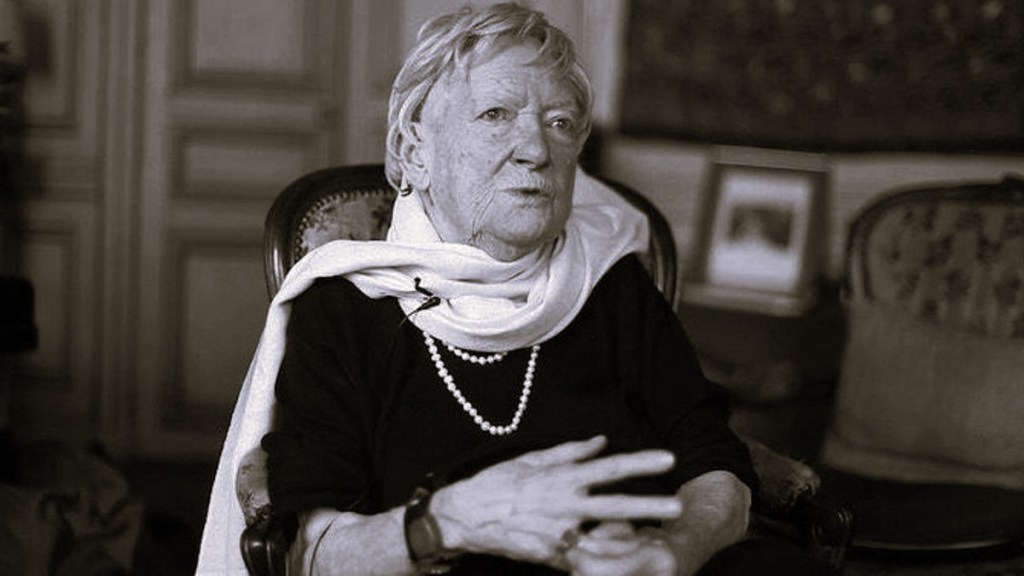
Born on a French farm in 1925, Marthe Gautier possessed precisely the qualities that the scientific establishment either didn’t recognise or chose to ignore – brilliance, determination, and a relentless commitment to advancing medical knowledge. Her story is not merely one of scientific discovery, but a damning indictment of how the scientific community has systematically erased women’s contributions to human progress.
From Farm to Laboratory
Marthe Gautier’s journey began on 10th September 1925 in Montenils, a small farming community in the Île-de-France region. She was the fifth of seven children in a family that had been farmers for generations, yet her mother harboured ambitious dreams for her daughters’ futures. This maternal determination would prove crucial – pushing Marthe towards medical school at a time when such aspirations were rare for women, particularly those from agricultural backgrounds.
The tragedy of war shaped Gautier’s early career. In 1942, she joined her beloved sister Paulette in Paris to pursue medical studies. But their shared dream was shattered when Paulette was killed by a stray bullet during the Liberation of Paris in 1944. Rather than retreat, Gautier honoured her sister’s memory by pressing forward with her medical training, carrying with her Paulette’s prescient advice: “Don’t forget, we are mere women, and to succeed, we have to work twice as hard as men”.
This proved prophetic. Gautier was one of only two women among 80 students to pass the competitive entrance examination for the prestigious Internat des hôpitaux de Paris. She spent four years gaining clinical experience in paediatrics, driven by her unwavering passion for caring for children.
The Harvard Training That Changed Everything
In 1955, after defending her thesis on paediatric cardiology under Robert Debré, Gautier received a scholarship to Harvard University. This was no ordinary opportunity – she was part of the first group of students from the Paris Hospitals to receive scholarships for study in the United States. At Harvard, she worked under the renowned specialist Alexander Nadas, but it was her training in cell culture techniques that would prove revolutionary.
Gautier learned to cultivate fibroblast cells from aorta fragments, a cutting-edge technique that was virtually unknown in France. She mastered the complex process of growing heart cell cultures, acquiring skills that would make her uniquely qualified to tackle one of medicine’s most pressing mysteries.
The Discovery That Should Have Made Her Famous
Upon returning to Paris in 1956, Gautier joined the team of Professor Raymond Turpin at the Armand-Trousseau Hospital. Turpin was investigating the chromosomal origins of Down syndrome, then known by the offensive term “mongolism”. The Swedish team had just established that humans possess 46 chromosomes, not 48 as previously believed, and Turpin hypothesised that Down syndrome might result from chromosomal abnormalities.
There was one problem: no one in France possessed the technical expertise to culture cells and examine chromosomes – except Marthe Gautier. She established France’s first in vitro cell culture laboratory, working with equipment she purchased herself when the department refused to provide adequate funding. Her conditions were primitive – a centrifuge, an old microscope, and glassware that she bought with her own money.
In May 1958, Gautier achieved her breakthrough. Examining cells from a child with Down syndrome, she observed something extraordinary – 47 chromosomes instead of the normal 46. She had discovered the extra chromosome that causes Down syndrome, establishing the first clear link between chromosomal abnormalities and genetic disorders.
The Theft of a Lifetime
But Gautier’s laboratory lacked the photographic equipment necessary to document her discovery. When her colleague Jérôme Lejeune offered to photograph her slides at a better-equipped laboratory, she naively agreed. It was a decision that would haunt her for decades.
Lejeune never returned the slides or the photographs. Instead, he began presenting Gautier’s discovery as his own work. In August 1958, he announced the findings at a conference in Canada, claiming credit for the discovery. When the groundbreaking paper was published in January 1959, Lejeune’s name appeared first, Gautier’s was relegated to second position and misspelled as “Marie Gauthier”.
Gautier later reflected on this betrayal: “I felt cheated in every respect. However, in the history of ‘discoveries’, many others have also gone unnoticed, like Johann Friedrich Miescher of Basel or Rosalind Franklin of Great Britain, and that in the field of DNA alone”. She understood that she had become another victim of what would later be termed the “Matilda Effect” – the systematic erasure of women’s scientific contributions.
A Career of Quiet Excellence
Rather than engage in a futile battle for recognition, Gautier chose a different path. She left Turpin’s laboratory in 1960 and returned to her first love – paediatric cardiology. She joined a different hospital, opened her own private practice, and devoted herself to caring for children with heart conditions.
Her decision to withdraw from the trisomy 21 research reflected both practical wisdom and deep frustration. As her great-niece Tatiana Giraud explained: “As a woman at the time and, uh, at the daughter of a farmer and no connection in Paris, so she just could not do anything, so she preferred forgetting about that”.
But Gautier never stopped conducting research. She joined INSERM (the French National Institute of Health and Medical Research) in 1967, eventually becoming Director of Research. She published extensively on congenital heart disease, infant rheumatic fever, and paediatric liver diseases. Her supervisors consistently praised her work, with one writing: “The scientific community owes a debt to Marthe Gautier”.
Yet even in her later career, the patterns of discrimination persisted. For seventeen consecutive years, from 1973 until her retirement, Gautier applied for promotion to Research Director One – the highest research position in the French national system. Despite glowing evaluations, she was passed over every single time, often in favour of younger male researchers with access to more modern equipment.
Breaking the Silence
For fifty years, Gautier remained silent about her role in the Down syndrome discovery. But in 2009, on the 50th anniversary of the publication, she finally spoke out. Her decision was prompted by the Vatican’s consideration of Jérôme Lejeune for sainthood, a prospect that she found unconscionable given his appropriation of her work.
Her revelations triggered a fierce backlash from Lejeune’s supporters. In 2014, when the 88-year-old Gautier was scheduled to receive a medal and speak at a genetics conference in Bordeaux, the Jérôme Lejeune Foundation sent bailiffs with a court order to record her speech. The foundation claimed she might “tarnish” Lejeune’s memory.
The intimidation tactic backfired spectacularly. Rather than silence Gautier, it drew international attention to her case. The conference organisers cancelled her public talk but awarded her the medal privately the following day. The stress of this confrontation was so severe that Gautier’s hair fell out, and she wore a wig for the remainder of her life.
Recognition at Last
The scientific community finally began to acknowledge Gautier’s contributions. In September 2014, INSERM’s ethics committee issued a statement declaring that the discovery of trisomy 21 would have been impossible without “the essential contributions” of both Gautier and Turpin. The same month, the French government awarded her the high honour of “Officier dans l’Ordre de la Légion d’Honneur”.
Simone Gilgenkrantz, a professor emeritus of human genetics and friend of Gautier’s, compared her case to that of Rosalind Franklin: “This story needs to be told in the name of women”. The comparison is apt – both women made fundamental discoveries that were appropriated by male colleagues, both were denied proper credit during their lifetimes, and both represent the systematic discrimination that has deprived science of countless contributions.
The Foundation of Medical Genetics
Gautier’s discovery fundamentally transformed our understanding of genetic disorders. Her identification of trisomy 21 established the entire field of medical cytogenetics and paved the way for genetic counselling, prenatal diagnosis, and our modern understanding of chromosomal abnormalities. Every genetic test performed today, every case of Down syndrome properly diagnosed and managed, every family counselled about genetic risks – all trace their origins to Gautier’s work in that primitive laboratory in 1958.
The broader implications extend far beyond genetics. Gautier’s story exposes the mechanisms by which scientific institutions have systematically erased women’s contributions. Her case demonstrates how credit for discoveries can be stolen not through dramatic confrontations, but through the quiet appropriation of slides, the strategic positioning of names on papers, and the exploitation of women’s collaborative instincts.
A Legacy of Courage
Marthe Gautier died on 30 April 2022, at the age of 96. She lived long enough to see her contributions finally recognised, but not long enough to witness the full impact of her courage in speaking out. Her willingness to challenge the established narrative, even at the age of 88, demonstrated that the pursuit of truth knows no expiration date.
Her life serves as both inspiration and warning. It celebrates the power of individual determination to overcome systemic barriers, whilst simultaneously exposing the devastating costs of institutional sexism. Gautier’s story reminds us that behind every great discovery attributed to a single man, there may well be a woman whose contributions have been systematically erased.
The scientific community owes Marthe Gautier more than belated recognition – it owes her a fundamental reckoning with the structures that enabled her erasure. Her legacy demands that we ask not just who deserves credit for past discoveries, but how we can ensure that future generations of women scientists receive the recognition they deserve from the moment of their contributions, not fifty years later.
In the end, Marthe Gautier’s greatest discovery may not have been the extra chromosome that causes Down syndrome, but rather the courage to challenge a system that sought to erase her from history. Her story stands as a symbol of the power of truth and the importance of ensuring that no scientist’s contributions are forgotten, overlooked, or stolen again.
Bob Lynn | © 2025 Vox Meditantis. All rights reserved.

 Vox Meditantis
Leave a comment