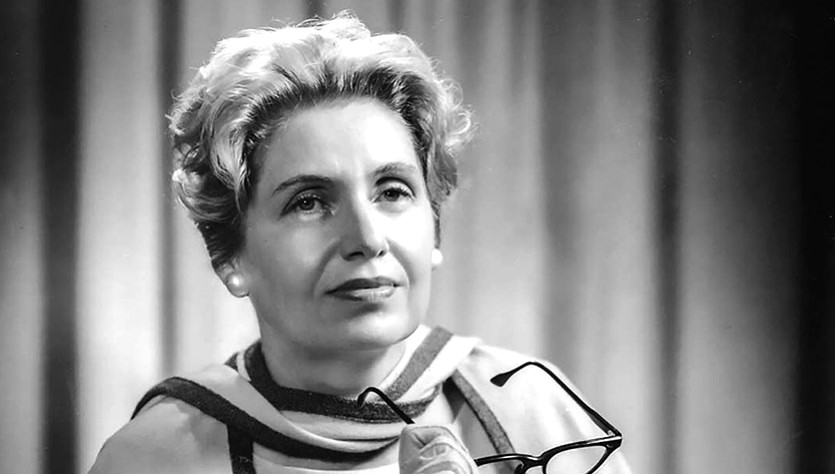
Here’s the stark truth: whilst Alexander Fleming, Howard Florey, and Ernst Boris Chain received Nobel Prizes for discovering penicillin, the woman who made it possible to actually save lives with their discovery remains largely unknown. Margaret Hutchinson Rousseau didn’t just break barriers—she shattered them, then got on with the business of saving millions of lives during humanity’s darkest hour.
Born in Houston, Texas, in 1910, Rousseau entered a world that had precious little room for women in science. Yet by 1937, she had achieved what no woman before her had managed: earning a doctorate in chemical engineering from MIT, becoming the first woman in United States history to hold such a qualification. This wasn’t merely a personal triumph—it was a seismic shift in a profession that would desperately need her expertise within the decade.
The Impossible Challenge
By 1943, the Allied forces faced a medical crisis that threatened to undermine their entire war effort. Penicillin had been discovered, yes, but producing it in meaningful quantities seemed utterly impossible. Scientists described the penicillin mould as “temperamental as an opera singer, the yields are low, the isolation difficult, the extraction murder, and purification invites disaster”. Traditional methods involved growing the mould on flat surfaces—a painstakingly slow process that yielded pitifully small amounts.
Here’s where Rousseau’s brilliance shone through. Working at E.B. Badger & Sons in Boston, she had already proven her mettle designing production processes for synthetic rubber and developing high-octane aviation fuel. These seemingly unrelated experiences gave her a unique perspective on the penicillin problem that the academic scientists lacked. She understood industrial-scale manufacturing in ways they simply didn’t.
Revolutionary Thinking
Rousseau proposed something radical: growing penicillin in deep tanks rather than on flat surfaces. This contradicted conventional wisdom but leveraged industrial fermentation processes at massive scale. It was the kind of thinking that separates true engineers from mere theorists—practical, bold, and utterly focused on results rather than academic orthodoxy.
The military, desperate for solutions, converted a Brooklyn ice factory into a production facility using Rousseau’s designs. They installed fourteen giant fermenters that would transform wartime medicine forever. By June 1944—just in time for the Normandy landings—over one million doses of penicillin were ready for Allied forces. Some sources suggest the figure reached two million doses, enough to treat the wounded from D-Day and beyond.
The Human Cost of Recognition
Before Rousseau’s breakthrough, a simple infected wound could prove fatal on the battlefield. Her engineering innovation saved countless Allied soldiers and established the template for modern pharmaceutical manufacturing that continues today. Yet here’s the bitter irony: whilst Fleming, Florey, and Chain received Nobel Prizes for their scientific discovery, Rousseau received virtually no public recognition for making their work practically meaningful.
This wasn’t an oversight—it was systematic erasure. Women’s contributions during World War II were consistently minimised once men returned from service. The post-war period saw women pushed out of high-level scientific positions they had competently filled during the conflict. Anti-nepotism laws were bent to benefit brothers or sons but rigidly enforced against wives. Women found themselves relegated to research associate positions at low pay or confined to women’s colleges without proper research support.
Professional Recognition
Rousseau’s own profession, however, recognised her worth. In 1945, she became the first female member of the American Institute of Chemical Engineers (AIChE). This was no token gesture—it acknowledged her fundamental contributions to the field. In 1983, she received AIChE’s Founders Award, the Institute’s highest honour, making her the first woman to achieve this recognition.
The Society of Women Engineers also presented Rousseau with its Achievement Award in 1983. Today, AIChE annually presents the Margaret Hutchinson Rousseau Pioneer Award for Lifetime Achievement by a Woman Chemical Engineer—a fitting tribute to someone who opened doors that had been firmly shut.
Beyond Penicillin
Rousseau’s career extended far beyond her wartime heroics. She continued working as a professional chemical engineer, eventually retiring in 1961 after a distinguished career. She lived to the remarkable age of 89, dying in 2000 at her home in Weston, Massachusetts. Throughout her career, she was characterised by one defining trait: no matter what the product, she “found a better way to manufacture it”.
Her marriage to William Caubu Rousseau, a fellow engineer and later MIT lecturer, produced one son, William, born in 1946. This detail matters because it demonstrates how Rousseau managed to maintain both a successful career and family life at a time when society insisted women must choose between the two.
The Broader Pattern
Rousseau’s story exemplifies a troubling pattern in how we remember scientific achievement. The theoretical discoverers—almost always men—receive the accolades, whilst the practical innovators who make discoveries useful to humanity—often women—are forgotten. This isn’t merely historical injustice; it’s a fundamental misunderstanding of how science actually works.
Discovery without application is merely curiosity. Rousseau transformed Fleming’s laboratory curiosity into a weapon against death itself. Her deep-tank fermentation process didn’t just save lives during World War II—it revolutionised pharmaceutical manufacturing permanently. Every antibiotic produced today owes something to her pioneering work.
Lessons for Today
What can we learn from Margaret Hutchinson Rousseau’s extraordinary life? First, that the most transformative solutions often come from applying expertise across different domains. Her background in synthetic rubber and aviation fuel gave her insights that pure microbiologists lacked. Second, that making the impossible practical is often more valuable than the initial discovery itself.
Most importantly, Rousseau’s story reminds us that progress requires both theoretical brilliance and practical engineering. The scientists who discovered penicillin deserved recognition, certainly. But the woman who made it possible to actually use their discovery deserved equal acclaim.
Margaret Hutchinson Rousseau wasn’t just a pioneer—she was a lifesaver whose innovations continue benefiting humanity decades after her death. It’s time we remembered her name alongside those of Fleming, Florey, and Chain. After all, without her engineering genius, their Nobel Prize-winning discovery might have remained nothing more than an interesting laboratory phenomenon whilst soldiers died from preventable infections.
That’s the real tragedy of forgotten women in STEM: not just the injustice to them personally, but the loss to all of us when we fail to properly understand and celebrate how scientific progress actually happens.
Bob Lynn | © 2025 Vox Meditantis. All rights reserved.

 Vox Meditantis
Leave a comment