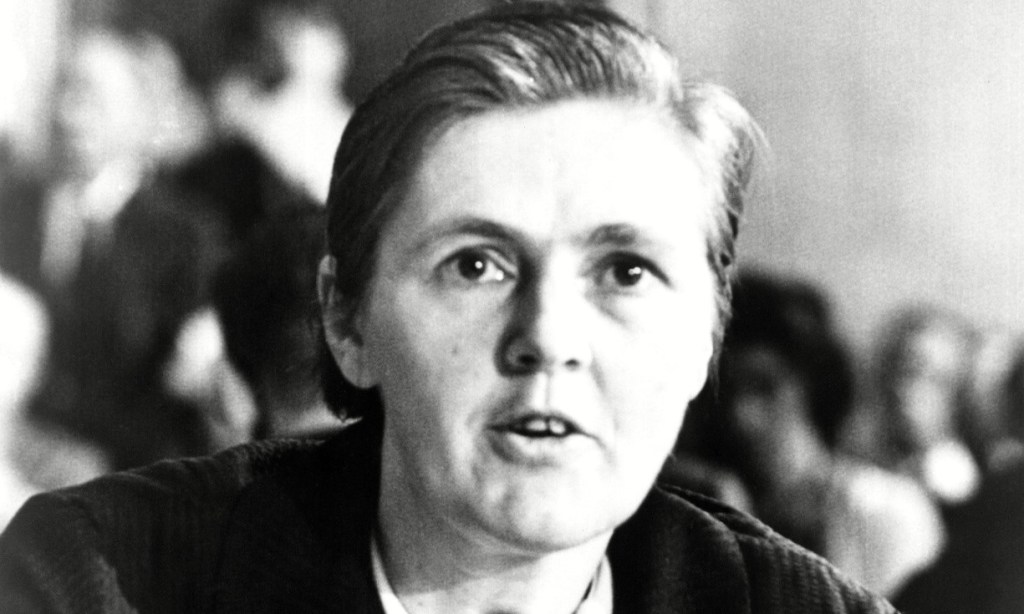
There are moments in history when a single individual’s determination becomes the bulwark against catastrophe. Such was the case with Dr Frances Oldham Kelsey, whose quiet courage in a dreary government building prevented one of the most devastating pharmaceutical disasters from reaching American shores. Yet her extraordinary achievement remains largely invisible, overshadowed by the very nature of what she accomplished: preventing a tragedy that never happened.
Early Life and Formation of a Scientific Mind
Frances Kathleen Oldham was born on 24th July 1914 in Cobble Hill, British Columbia, the daughter of a retired British army officer and a Scottish mother. Known as “Frankie” throughout her life, she displayed an early passion for learning, teaching herself to read by listening to her mother instruct her older brother. Her intellectual curiosity was evident from childhood—she graduated secondary school at just fifteen years of age, already determined to pursue a career in science.
Her academic journey began at Victoria College (now the University of Victoria) before she moved to McGill University in Montreal. There, she earned her Bachelor of Science in 1934 and Master of Science in pharmacology in 1935. The timing was significant: graduating during the Great Depression, when opportunities for women in science were particularly scarce.
A fortuitous misunderstanding changed the trajectory of her career. Following her professor’s suggestion, she wrote to Dr E.M.K. Geiling at the University of Chicago, who was establishing a new pharmacology department. Geiling, assuming “Frances” was a male name, offered her a research position and scholarship. Rather than correct the error, Kelsey accepted, embarking on what would become a groundbreaking career in pharmacology and medicine.
The Foundation Years: Learning Through Crisis
At the University of Chicago, Kelsey’s education was shaped by real-world tragedy. During her second year, she assisted Geiling on an FDA contract investigating the elixir sulfanilamide disaster of 1937. This antimicrobial preparation had killed 107 people, including 34 children, due to the use of diethylene glycol—essentially antifreeze—as a solvent. The investigation revealed how inadequate drug testing could have fatal consequences, a lesson that would prove prescient decades later.
This experience exposed Kelsey to the dangerous gaps in pharmaceutical regulation and the devastating consequences of rushing drugs to market without proper safety testing. The tragedy directly led to the Federal Food, Drug and Cosmetic Act of 1938, establishing the principle that drug manufacturers must demonstrate safety before approval.
Following this formative experience, Kelsey continued her research, focusing on antimalarial drugs during World War II. Through this work, she made a crucial discovery about how drugs could cross the placental barrier and affect developing foetuses. This knowledge would prove absolutely vital when she later encountered thalidomide.
After completing her PhD in pharmacology in 1938, Kelsey remained at the University of Chicago as an instructor and assistant professor. She married fellow pharmacologist Dr Fremont Ellis Kelsey in 1943, and later earned her medical degree in 1950, becoming one of the few women to hold both PhD and MD qualifications in her era.
The Critical Moment: Standing Against Thalidomide
In 1960, at age 46, Kelsey joined the FDA as a medical officer, one of only eleven doctors then working on pharmaceutical safety evaluation. The agency was ill-equipped for the post-war pharmaceutical boom, operating with minimal staff and limited authority. Under existing regulations, the FDA had just 60 days to reject a drug application; failure to act meant automatic approval.
Her first assignment seemed straightforward: reviewing an application for thalidomide, a sedative already available in dozens of countries worldwide. The German-developed drug was marketed as a “wonder drug”—a safe, non-addictive sleeping pill that was particularly popular for treating morning sickness in pregnant women. Richardson-Merrell, the American licensee, was pressing aggressively for rapid approval.
But Kelsey was troubled by the application’s inadequate safety data. Despite enormous pressure from the pharmaceutical company—whose representatives thought her “crazy” and accused her of “pigheadedness”—she refused to approve the drug. Her concerns were methodical and scientific: the studies were incomplete, the toxicity data insufficient, and crucially, there was no evidence of the drug’s safety during pregnancy.
For nineteen months, Kelsey withstood relentless pressure from Richardson-Merrell. Company officials contacted her superiors, questioned her competence, and demanded meetings to override her decision. Yet she held firm, insisting on proper evidence of safety before approval.
The Vindication: A Tragedy Averted
In November 1961, reports began emerging from Germany and Britain of a horrific epidemic. Thousands of babies were being born with severe limb deformities—phocomelia—where arms and legs resembled flippers or were missing entirely. The cause was thalidomide use during early pregnancy.
The scale of the disaster was staggering. More than 10,000 children across 46 countries were born with severe deformities, and thousands more died in utero. In Germany alone, an estimated 10,000 babies were affected. The drug caused not only limb malformations but also damage to eyes, ears, and internal organs.
Thanks to Kelsey’s steadfast refusal, only 17 American children were affected—through samples distributed to physicians during clinical trials. Her determination had prevented a catastrophe of unimaginable proportions.
Recognition and Lasting Impact
On 7th August 1962, President John F. Kennedy awarded Kelsey the President’s Award for Distinguished Federal Civilian Service, making her only the second woman to receive this highest civilian honour. Kennedy praised her “exceptional judgment in evaluating a new drug for safety for human use” and her prevention of “a major tragedy of birth deformities in the United States”.
The thalidomide crisis catalysed fundamental changes in pharmaceutical regulation. In 1962, Congress passed the Kefauver-Harris Amendment, revolutionising drug approval processes. The new law required companies to prove not only safety but also efficacy before approval, mandated informed consent for clinical trials, and granted the FDA greater oversight of prescription drug advertising.
Kelsey continued her distinguished career at the FDA for 45 years, rising to head the Division of Scientific Investigations and playing a crucial role in developing modern clinical trial protocols. She became a formidable gatekeeper against other suspect drugs and helped establish ethical standards for drug testing on vulnerable populations. She retired in 2005 at age 90, having fundamentally transformed pharmaceutical safety regulation.
The Invisible Achievement: Why Frances Kelsey Remains Overlooked
Despite preventing one of the most catastrophic pharmaceutical disasters in history, Frances Kelsey remains largely unknown outside medical circles. This obscurity reflects deeper biases in how we celebrate scientific achievement. Her triumph was fundamentally preventative—stopping something terrible from happening rather than discovering something new. Such achievements are inherently less visible in scientific narratives that prioritise innovation over protection.
Furthermore, Kelsey worked within government bureaucracy rather than academic research, limiting her recognition in scientific circles that traditionally honour university-based discoveries. Academic achievements—papers, citations, grants—provide individual recognition, whilst government service often involves collective, behind-the-scenes work that rarely receives public acknowledgement. The very nature of regulatory science means that success is measured by disasters prevented rather than breakthroughs achieved.
Women in STEM fields face additional barriers to recognition, particularly when working in government roles rather than high-profile academic positions. Despite efforts to diversify STEM fields, women remain underrepresented in federal scientific positions and leave at disproportionately high rates. Kelsey’s era presented even greater challenges for women scientists, making her achievements all the more remarkable.
A Legacy of Vigilance
Frances Kelsey’s story embodies the fundamental principle that protecting public health requires unwavering scientific integrity, even in the face of enormous pressure. Her refusal to compromise on safety standards established the modern framework for pharmaceutical regulation that continues to protect millions of lives today.
Her legacy extends beyond thalidomide. The regulatory principles she helped establish—rigorous clinical trials, informed consent, comprehensive safety testing—form the bedrock of modern medicine. Every drug that reaches the market today must meet standards she helped create through her quiet determination in a government office.
Dr Frances Kelsey died on 7th August 2015, aged 101, having lived to see the profound impact of her work. She demonstrated that sometimes the greatest scientific achievements come not from discovery, but from the courage to say no when the evidence demands it. In an age of rapid pharmaceutical development and commercial pressure, her example of scientific integrity remains more relevant than ever.
Her story reminds us that true heroism in science often occurs not in the spotlight of innovation, but in the quiet corners of regulatory review, where vigilant scientists stand guard against the forces that would compromise public safety for profit. Frances Kelsey was such a guardian, and millions of families owe her a debt they will never know they have.
Bob Lynn | © 2025 Vox Meditantis. All rights reserved.

 Vox Meditantis
Leave a comment