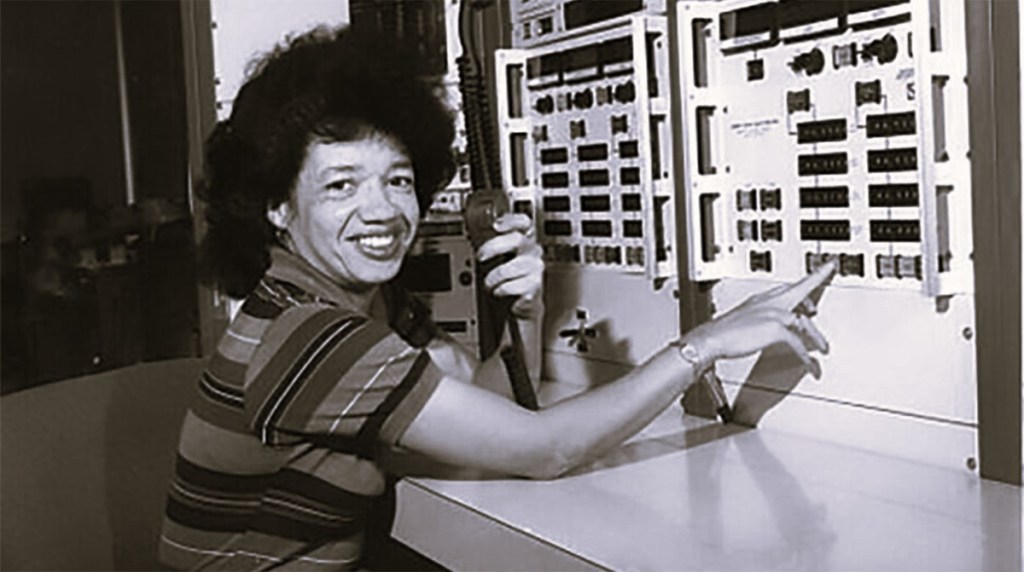
The promise of supersonic commercial aviation – reducing flight times from hours to minutes across continents – has tantalized engineers and passengers alike for decades. Yet behind this dream lies a fundamental obstacle: the thunderous sonic boom that occurs when aircraft exceed the speed of sound. What few realise is that one of the most significant breakthroughs in solving this problem came from a brilliant African American mathematician whose contributions remained largely hidden until recent years.
From Monroe to Mathematical Mastery
Christine Mann Darden was born on 10th September 1942 in Monroe, North Carolina, the youngest of five children to Noah Horace Mann Sr., an insurance salesman, and Desma I. Chaney, an elementary school teacher. Her upbringing in this modest mill town of 7,000 people would seem an unlikely launching pad for a career that would reshape aerospace engineering. Yet from an early age, Darden displayed the intellectual curiosity that would drive her extraordinary achievements.
Rather than playing with dolls, young Christine preferred dismantling them to understand their mechanics. Weekend mornings found her helping her father repair his car, developing what she later described as an inherent desire to understand “how things worked”. This mechanical aptitude, combined with exceptional academic performance, led her parents to recognise her potential and encourage her to pursue opportunities beyond their small town’s limitations.
Darden’s mathematical awakening came during her geometry class in high school. What had initially been an interest in medicine transformed into a passion for mathematics after she encountered the elegance of geometric proofs. She completed her final two years at Allen High School, a Methodist boarding school in Asheville, North Carolina, where she graduated as valedictorian in 1958.
Her academic excellence earned her a scholarship to Hampton Institute (now Hampton University), a historically Black college where she would earn her bachelor’s degree in mathematics in 1962. The institution’s emphasis on educational excellence and social responsibility would prove formative, as would her participation in civil rights protests and sit-ins alongside her peers during this pivotal period in American history.
The Teaching Years and Advanced Study
Following graduation, Darden initially pursued teaching, earning a teaching certificate and working at Russell High School in Lawrenceville, Virginia, and later at Norcom High School in Portsmouth, Virginia. It was during this period that she met her future husband, Walter Lee Darden Jr., a middle school science teacher. However, teaching represented only a waystation in her intellectual journey.
Driven by her desire for deeper mathematical engagement, Darden enrolled at Virginia State University to pursue a master’s degree in applied mathematics. Here she encountered Dr. Reuben McDaniels, head of the mathematics department, who would become both mentor and advocate. McDaniels not only provided her with a fellowship in aerosol physics but also imparted crucial life lessons, including his memorable advice: “You don’t always get another chance to make a first impression on people”.
By 1967, Darden had completed her master’s degree and was teaching mathematics at Virginia State University when opportunity came calling from an unexpected quarter.
Entering NASA’s Hidden World
In 1967, NASA’s Langley Research Center in Hampton, Virginia, hired Darden as a “human computer” – one of the last generation of predominantly African American women mathematicians who performed complex calculations by hand for the agency’s engineers. These women, working in what had once been the segregated “West Area Computing Unit,” had become legendary for their precision and reliability in supporting America’s aerospace endeavours.
Yet Darden quickly discovered the limitations of her role. While she excelled at the intricate calculations required, she yearned for the creative mathematical work that would allow her to generate rather than merely process data. For eight years, she performed her duties with characteristic excellence whilst observing a troubling pattern: men with identical educational backgrounds were consistently hired as engineers, whilst women with the same qualifications remained confined to computational roles.
The turning point came when Darden decided to confront this inequality directly. In a moment of remarkable courage, she approached her supervisor to ask why men with her qualifications were hired as engineers whilst she remained a computer. Rather than dismissing her concerns, her supervisor was sufficiently impressed by her skills and initiative to transfer her to the engineering section in 1973.
Revolutionary Work in Sonic Boom Research
Darden’s first engineering assignment would define the next quarter-century of her career: developing a computer program to analyse sonic booms. This seemingly technical task opened the door to groundbreaking research that would transform understanding of supersonic flight.
The physics of sonic booms had long been understood: when aircraft exceed the speed of sound, they create shock waves that manifest as thunderous noise capable of breaking windows and damaging structures. These effects had led to bans on supersonic flight over populated areas, effectively killing commercial supersonic aviation in the United States.
Darden’s initial assignment involved implementing equations that would calculate the equivalent area distribution of aircraft designed to minimise sonic booms based on parameters such as Mach number, altitude, weight, and aircraft length. However, her mathematical insight soon led her beyond mere implementation to fundamental innovation.
Working with the theoretical foundation established by researchers Seebass and George, Darden made a crucial breakthrough by modifying their sonic boom minimisation method to account for real atmospheric conditions rather than idealised isothermal conditions. This modification, which became known in the field as the “Darden-modified Seebass and George method,” significantly enhanced the practical applicability of sonic boom reduction techniques.
Her work demonstrated that aircraft could be designed with specific nose and wing configurations that would create “shaped sonic booms” – pressure signatures that reduced the intensity of the ground-level noise. Rather than the traditional N-shaped pressure wave that creates the characteristic double-crack of a sonic boom, Darden’s research showed how aircraft geometry could produce flattened signatures that dramatically reduced noise levels.
Academic Achievement and Leadership
Recognising that her research demanded deeper theoretical grounding, Darden pursued doctoral studies at George Washington University whilst maintaining her full-time NASA position and raising her three daughters. This remarkable juggling act culminated in 1983 when she earned her Doctor of Science degree in mechanical engineering, with a specialisation in fluid mechanics.
Her doctoral research focused on sonic boom prediction and minimisation, establishing her as one of the world’s leading experts in supersonic aerodynamics. The significance of her work was recognised when she was appointed technical leader of NASA’s Sonic Boom Group in 1989, making her responsible for developing the agency’s entire sonic boom research programme.
Under Darden’s leadership, the Sonic Boom Group became part of NASA’s High Speed Research Program, an ambitious initiative aimed at developing environmentally friendly supersonic commercial aircraft. Her team’s work extended beyond noise reduction to address atmospheric pollution and ozone depletion concerns associated with high-altitude supersonic flight.
Validation and Recognition
The ultimate validation of Darden’s theoretical work came in 2003 when a modified F-5 aircraft incorporating her sonic boom shaping technology achieved a successful test flight. The flight demonstrated that the shaped sonic boom concept could work in practice, producing the flattened pressure signature that Darden’s team had predicted.
This breakthrough represented the culmination of over 30 years of research and positioned NASA to develop full-scale supersonic aircraft with acceptable noise levels. The success led to continued funding for what would eventually become NASA’s X-59 Quiet SuperSonic Technology (QueSST) programme, directly building upon Darden’s foundational work.
Throughout her career, Darden authored more than 50 technical publications covering supersonic flow, high-lift wing design, flap design, sonic boom prediction, and sonic boom minimisation. Her research contributions were recognised through numerous awards, including the Dr. A.T. Weathers Technical Achievement Award from the National Technical Association in 1985 and multiple NASA performance awards.
Breaking Barriers and Building Bridges
Darden’s achievements extended far beyond her technical contributions. In 1999, she became the first African American woman at NASA’s Langley Research Center to be promoted to the Senior Executive Service, the highest rank in federal civil service. This appointment recognised not only her technical excellence but also her leadership capabilities and commitment to advancing opportunities for others.
Her final role at NASA, as Director of the Office of Strategic Communications and Education, reflected her dedication to inspiring the next generation of scientists and engineers. In this position, she was responsible for external communications, community outreach, and educational programmes – work that allowed her to advocate directly for increased participation of women and minorities in STEM fields.
Even after her retirement in 2007, Darden continued her advocacy work, speaking at schools and universities, conducting workshops, and mentoring young people interested in mathematics and engineering. Her message remained consistent: with sufficient dedication and proper preparation, any barrier could be overcome.
Legacy and Recognition
The broader recognition of Darden’s contributions came through her inclusion in Margot Lee Shetterly’s 2016 bestseller “Hidden Figures,” which brought the stories of NASA’s African American women mathematicians to international attention. The book’s success, followed by the acclaimed film adaptation, finally provided Darden and her colleagues with the recognition they had long deserved.
In 2019, Darden received the Congressional Gold Medal, one of the highest civilian honours in the United States, alongside her fellow “Hidden Figures” Katherine Johnson, Mary Jackson, and Dorothy Vaughan. This recognition represented not merely personal achievement but acknowledgment of the broader contributions of the hundreds of women who had worked as human computers during the crucial early decades of American aerospace development.
The Continuing Revolution
Today, as NASA continues developing supersonic aircraft based on principles Darden helped establish, her work remains more relevant than ever. The quest for quiet supersonic flight continues, with her research providing the theoretical foundation for technologies that may finally make commercial supersonic aviation viable over populated areas.
Christine Darden’s story embodies both the triumph of individual excellence and the tragedy of systemic barriers that kept brilliant minds hidden for far too long. Her transition from human computer to leading engineer illustrates what becomes possible when talent is recognised and nurtured, regardless of gender or race. More importantly, her legacy continues inspiring new generations of women and minorities to pursue careers in STEM fields, ensuring that future innovations will benefit from the full spectrum of human intellectual capability.
The sonic boom may have been Darden’s technical specialty, but her greatest impact lies in the barriers she shattered and the paths she opened for others to follow. In reshaping our understanding of supersonic flight, she simultaneously transformed our understanding of who can be a scientist, engineer, and leader in the continuing quest to push the boundaries of human knowledge and capability.
Bob Lynn | © 2025 Vox Meditantis. All rights reserved.

 Vox Meditantis
Leave a comment