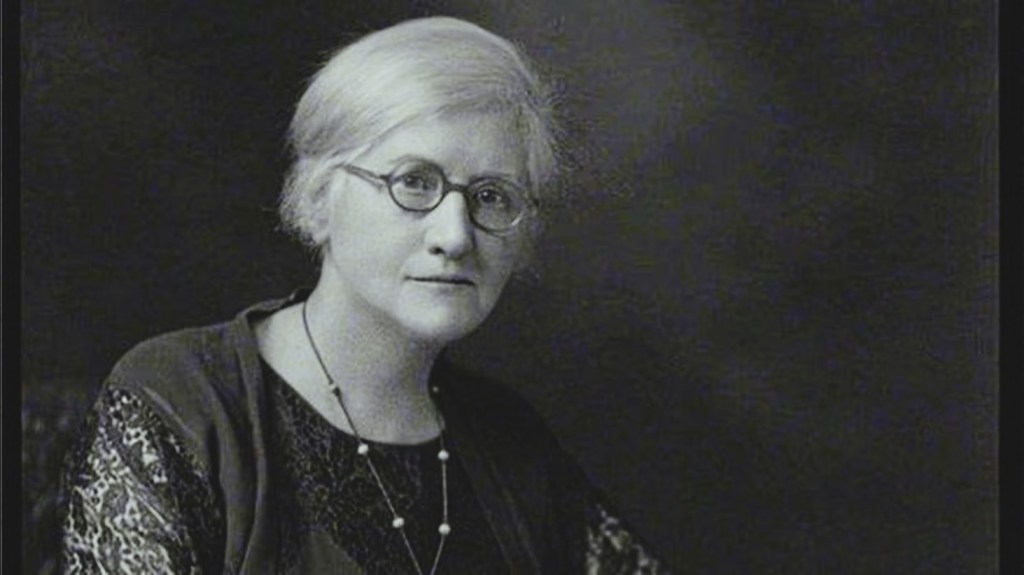
In the annals of British science, few stories expose the institutional sexism of the Victorian era quite like that of Annie Scott Dill Maunder. Here was a woman who outshone her male contemporaries in mathematics, revolutionised solar astronomy, and helped establish theories about climate change that remain relevant today—yet was systematically denied recognition, payment, and even basic professional respect. Her story is not merely one of individual brilliance triumphing over adversity; it is a damning indictment of a scientific establishment that squandered talent in service of prejudice.
A Mind Too Sharp for Society’s Constraints
Born in Strabane, County Tyrone, in 1868, Annie Russell demonstrated exceptional mathematical ability from childhood. Her father, a Presbyterian minister, recognised her talents and ensured she received proper education—first at home, then at the Ladies Collegiate School in Belfast. This early investment in her intellect would prove transformative, though society would do its utmost to waste it.
At eighteen, Annie won a scholarship to Girton College, Cambridge, where she studied the Mathematical Tripos. In 1889, she graduated with honours as the top mathematician of her year at Girton. Yet here we encounter the first bitter irony of her story: despite her academic excellence, Annie left Cambridge with no formal recognition. The university, in its infinite wisdom, refused to award degrees to women until 1947. One can only imagine the frustration of being the finest mathematical mind of your cohort, yet being denied the basic credential that would open professional doors.
This was not oversight; it was policy. A deliberate decision to exclude half the population from intellectual recognition, regardless of merit. The injustice was so profound that when Cambridge finally rectified this disgrace nearly sixty years later, Annie herself was among those posthumously awarded the degrees they had earned decades earlier.
The Royal Observatory’s Shameful Bargain
After briefly teaching mathematics—one of the few respectable professions available to educated women—Annie learned of opportunities at the Royal Observatory Greenwich. The Astronomer Royal, William Christie, faced a staffing crisis. He needed skilled mathematicians to process observational data, but Treasury parsimony prevented him from hiring proper assistants. His solution? Employ university-educated women as “Lady Computers” for a fraction of the cost.
The arrangement was as cynical as it was exploitative. These women, despite being “older and considerably better educated than the Boy Computers,” received identical wages to fourteen-year-old boys. Annie earned £4 per month—a pittance that forced the Lady Computers to find and pay for their own accommodation while teenage boys lived with their parents. The Royal Observatory was extracting maximum value from exceptional minds whilst paying subsistence wages.
Annie joined this exploitative system in September 1891, assigned to the Astrographic Department. Yet even within these constraints, her brilliance shone through. She quickly distinguished herself in solar research and astronomical photography, developing expertise that would transform our understanding of the Sun.
Scientific Brilliance Constrained by Institutional Prejudice
Annie’s contributions to astronomy were nothing short of revolutionary. Working alongside her future husband Walter Maunder, she helped develop the famous “butterfly diagram”—a visual representation of sunspot distribution that revealed the 11-year solar cycle. This wasn’t merely theoretical work; it provided crucial insights into the Sun’s magnetic behaviour and its effects on Earth.
Her expertise in eclipse photography was unparalleled. During the 1898 solar eclipse expedition to India, Annie used a camera of her own design to capture images of the solar corona, including a remarkably long streamer that impressed the international astronomical community. Her photographic innovations and observational skills earned recognition even from those who questioned women’s place in science.
Most significantly, the Maunders identified what became known as the “Maunder Minimum”—a period from 1645 to 1715 when sunspot activity was minimal, coinciding with the Little Ice Age. This discovery established crucial links between solar activity and Earth’s climate, work that remains relevant to contemporary climate science. Their research demonstrated that “when sunspots are scarce there are few magnetic disturbances and auroral displays”—insights that helped establish the foundations of space weather prediction.
The Marriage Bar: Institutionalised Discrimination
In 1895, Annie faced a choice that epitomises the impossible position of professional women in Victorian Britain. She could marry Walter Maunder, the man she loved and respected scientific collaborator, or maintain her career. She could not have both. The civil service marriage bar—a policy that seems almost designed to punish women for personal happiness—forced her resignation upon marriage.
This was not some quirky historical anomaly; it was systematic discrimination. The government deliberately excluded married women from permanent positions, treating them as “second-class citizens”. Between 1934 and 1938, only eight waivers were granted—a token gesture that highlighted the policy’s fundamental injustice. The marriage bar would not be fully abolished until 1946 for the Home Civil Service and 1973 for the Foreign Service—a timeline that demonstrates how entrenched such discrimination was.
Annie’s response to this impossible situation reveals her character. Rather than abandon astronomy entirely, she continued working unpaid, contributing her expertise whilst receiving no recognition or compensation. During the First World War, she returned as a volunteer, eventually being rehired as a Computer in 1919. Her dedication to science transcended the petty barriers erected by small-minded administrators.
Recognition Delayed and Credit Denied
Perhaps the most galling aspect of Annie’s treatment was the systematic erasure of her contributions. Much of her work was published under her husband’s name or not at all. When “The Heavens and Their Story” appeared in 1908, Walter openly acknowledged in the preface that the book “is almost wholly the work of my wife”—yet both names appeared on the title page, obscuring her primary authorship.
The Royal Astronomical Society’s treatment of Annie exemplifies institutional hypocrisy. Despite her obvious qualifications and contributions, the Society rejected her membership application because of her gender. Only in 1916, after the ban on women was finally lifted, was she elected as a Fellow—twenty-one years after her initial application. By then, she had already established herself as one of Britain’s leading solar astronomers, making the delay not just discriminatory but absurd.
A Legacy Silenced but Resilient
Annie Maunder’s story transcends individual achievement; it illuminates the systematic waste of human potential that characterised British scientific institutions for generations. Here was a woman whose mathematical brilliance, innovative photography, and groundbreaking research advanced our understanding of the cosmos—yet she faced constant barriers, unequal pay, and deliberate obscurity.
The institutions that should have celebrated her contributions instead created obstacles at every turn. Cambridge denied her a degree despite academic excellence. The Royal Observatory exploited her expertise whilst paying subsistence wages. The Civil Service forced her to choose between marriage and career. The Royal Astronomical Society excluded her for decades despite her obvious qualifications.
Annie Maunder’s achievements—the butterfly diagram, the Maunder Minimum, her eclipse photography innovations—remain foundational to solar astronomy. Her work on climate-solar connections anticipated contemporary research by more than a century. Yet how many know her name today compared to lesser male contemporaries who faced no such barriers?
The Price of Prejudice
Annie Maunder died in 1947, having witnessed the partial dismantling of some barriers that had constrained her career. The Civil Service marriage bar was finally abolished the year before her death. Cambridge had at last begun awarding degrees to women. Progress, but at what cost?
Her story should serve as both inspiration and warning. It demonstrates that brilliance will emerge despite institutional opposition, but also reveals how much scientific progress we may have lost to discrimination. How many other Annie Maunders were discouraged before they could contribute? How much knowledge was never discovered because talented minds were excluded or marginalised?
Today, as we celebrate Annie Maunder’s contributions to astronomy and climate science, we must remember that recognition delayed is justice denied. Her legacy demands not just admiration, but commitment to ensuring that talent, not prejudice, determines who can contribute to human knowledge. Anything less dishonours both her memory and our scientific future.
Bob Lynn | © 2025 Vox Meditantis. All rights reserved.

 Vox Meditantis
Leave a comment