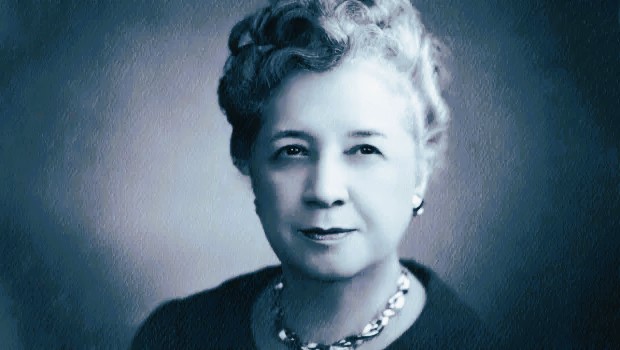
Here stands a woman who shattered barriers twice over—first as the first African American woman to earn a doctorate in mathematics, then as an educational reformer who took on institutional racism and won. Yet Martha Euphemia Lofton Haynes remains largely forgotten, her name absent from most histories of mathematics and civil rights. This neglect reveals our persistent failure to recognise those who chose teaching over research, community service over personal glory, and justice over comfort. Haynes devoted forty-seven years to educating others whilst simultaneously dismantling the very systems designed to limit their potential. Her story isn’t merely one of individual achievement—it’s a damning indictment of how we value mathematical brilliance only when it serves elite institutions rather than oppressed communities.
Breaking Mathematical Barriers in Jim Crow America
Born on 11 September 1890 in Washington, D.C., Martha Euphemia Lofton entered a world where her race and gender would dictate severe limitations on her aspirations. Her father, Dr. William S. Lofton, was a prominent Black dentist who supported African American businesses, whilst her mother, Lavinia Day Lofton, taught kindergarten and remained active in the Catholic Church. This was no ordinary family—they understood that excellence would be their children’s only weapon against systemic discrimination.
The young Euphemia, as she preferred to be called, excelled immediately. She graduated as valedictorian from M Street High School in 1907, then completed her teaching certification at Miner Normal School in 1909. But teaching certificates weren’t enough for someone with her mathematical mind. She enrolled at Smith College, simultaneously working as an elementary teacher to pay her way—a necessity that reveals the financial barriers facing even the brightest Black students. In 1914, she graduated with a Bachelor of Arts in mathematics and a minor in psychology.
After marrying childhood friend Harold Appo Haynes in 1917, she continued her education at the University of Chicago, earning a Master’s degree in education in 1930. Her thesis examined the limitations of standardised testing—prescient work that would later inform her battles against educational tracking. That same year, she founded the mathematics department at Miner Teachers College, an institution dedicated to training African American teachers. Here was someone who understood that creating opportunities for one’s community mattered as much as personal achievement.
The Doctoral Achievement That Made History
In 1943, Haynes earned her doctorate in mathematics from the Catholic University of America, becoming the first African American woman to achieve this distinction. Her dissertation, “The Determination of Sets of Independent Conditions Characterizing Certain Special Cases of Symmetric Correspondences,” examined geometric representations on parametric rational plane curves. The work was supervised by Professor Aubrey E. Landry and represented serious mathematical scholarship in algebraic geometry.
Yet here lies the tragedy of how we remember mathematical achievement. Haynes didn’t continue research in this specialised field after graduation—not because she lacked ability, but because she chose a different path. She understood that her community needed educators more than it needed another research mathematician publishing papers for elite audiences. This choice has contributed to her historical invisibility, as if mathematical significance only counts when measured by publications rather than lives transformed.
Transforming Education Through Mathematics
For nearly three decades, Haynes served as professor and chair of the mathematics department at what became the University of the District of Columbia. She taught at every level—from first grade at Garrison and Garfield Schools to chairing the mathematics department at the prestigious Dunbar High School. Her approach to teaching reflected a deep understanding that mathematics education could either perpetuate inequality or become a tool for liberation.
In a 1945 address titled “Mathematics—Symbolic Logic,” Haynes articulated her educational philosophy with characteristic precision: she stressed the need for teachers to convey mathematics’ full beauty through logic whilst allowing significant time for observation and reflection. This wasn’t merely pedagogical theory—it was educational activism. She recognised that Black students, systematically undereducated by design, needed mathematics teachers who understood both the subject’s intellectual demands and the social barriers their students faced.
Her teaching philosophy extended beyond classroom walls. In a 1960 commencement address, she declared: “I believe there are two requisites for success in life: (1) that one be always a student and (2) that he dedicate himself to the service of others”. These weren’t empty platitudes—they were principles she lived by whilst watching supposedly progressive institutions maintain discriminatory practices through supposedly neutral academic policies.
The Battle Against Educational Apartheid
Haynes’s appointment to the District of Columbia Board of Education in 1960 marked the beginning of her most consequential work. In 1966, she became the first woman to chair the board, inheriting a system that maintained racial segregation through an insidious “tracking” system. This system sorted students into academic or vocational tracks based on standardised tests that systematically disadvantaged Black and poor students.
The tracking system represented institutional racism at its most sophisticated—appearing neutral whilst ensuring discriminatory outcomes. Black students found themselves disproportionately assigned to vocational tracks that prepared them for manual labour rather than higher education. Haynes recognised this for what it was: educational apartheid designed to maintain racial hierarchies under the guise of academic objectivity.
Her opposition wasn’t merely philosophical—it was strategic and relentless. She argued that tracking discriminated against African American students by “assigning them to education tracks that did not prepare them for college”. The fight culminated in the landmark 1967 Hobson v. Hansen court case, filed by civil rights activist Julius Hobson against Superintendent Carl F. Hansen. Judge J. Skelly Wright’s decision ruled that tracking was discriminatory towards poor and minority students, marking the first federal court case to rule against discriminatory use of standardised tests in educational contexts.
This victory came at personal cost. Haynes faced fierce opposition from those who preferred maintaining the status quo through technical justifications. She was deposed as board president in July 1967, though she remained on the board until 1968. The Washington Post obituary noted that she was recognised for advancing the D.C. school system “further in one year than what had been done in the previous four”.
A Legacy Beyond Mathematics
Haynes’s commitment to justice extended throughout her life. She served on numerous Catholic organisations, becoming president of the Washington Archdiocesan Council of Catholic Women from 1964 to 1966. In 1959, Pope John XXIII awarded her the Papal decoration “Pro Ecclesia et Pontifice” for her service to the church and community. She also participated in the NAACP and the American Association of University Women.
Upon her death in 1980, Haynes left $700,000 to Catholic University, funds used to establish an endowed chair in the Department of Education and an annual award for mathematics students. The Euphemia Lofton Haynes Award, established in 2018, recognises junior mathematics majors who demonstrate excellence and promise. Yet these honours, whilst meaningful, hardly match the recognition given to mathematicians whose primary contributions were research publications rather than educational transformation.
Why We Must Remember
Martha Euphemia Lofton Haynes remains forgotten precisely because she chose community service over individual glory, teaching over research prestige, and justice over comfort. This neglect reflects broader failures in how we value intellectual achievement. We celebrate mathematicians who advance abstract theory whilst overlooking those who use mathematics to advance human dignity. We honour those who publish in elite journals whilst forgetting those who educated future generations.
Her story demands recognition not merely as historical curiosity, but as moral imperative. Haynes understood that mathematical knowledge without social justice remains incomplete, that individual achievement without community uplift perpetuates inequality. She chose the harder path—transforming systems rather than simply succeeding within them.
In our current moment of renewed attention to educational equity and racial justice, Haynes’s example offers both inspiration and challenge. She demonstrated that intellectual excellence and social activism aren’t competing values but complementary forces. Her legacy insists that we measure mathematical significance not only by theorems proved but by barriers broken, not only by papers published but by lives transformed. Mathematics needs more heroes like Martha Euphemia Lofton Haynes—those who understand that true mathematical achievement serves justice, not just elite institutions.
Bob Lynn | © 2025 Vox Meditantis. All rights reserved.

 Vox Meditantis
Leave a comment