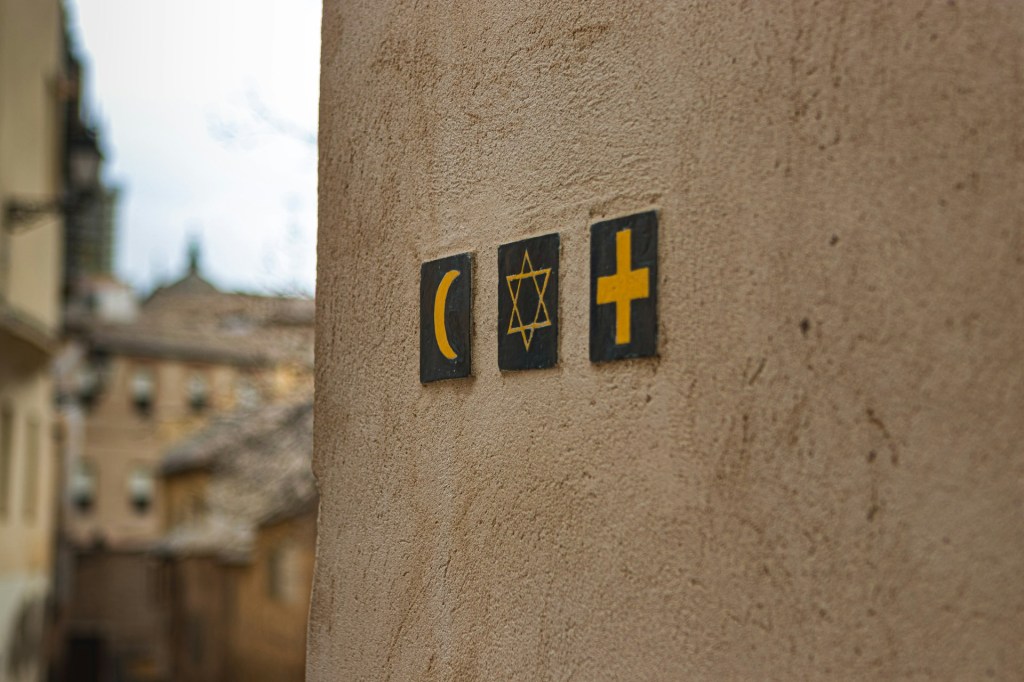
The assumption that modernity inevitably leads to religious decline has become one of the most persistent—and misleading—orthodoxies of our time. The so-called “secularisation thesis,” which dominated academic thinking for decades, promised a world where reason would triumph over faith, where science would supplant superstition, and where religious influence would steadily wither away. Yet across the globe today, from the rise of political Islam to the resurgence of evangelical Christianity in America, from Hindu nationalism in India to the persistence of faith in France’s supposedly secular republic, religion stubbornly refuses to follow the script. This isn’t simply about believers clinging to outdated traditions—it represents a fundamental challenge to how we understand the relationship between modernity and faith, with profound implications for politics, education, and identity in an interconnected world.
The Traditional Secularisation Thesis
The secularisation thesis emerged from Enlightenment thinking and was crystallised by sociologists in the mid-20th century into a seemingly unassailable proposition: as societies modernise, they become less religious[2][13]. This wasn’t merely about declining church attendance or weakening institutional power. The thesis claimed something far more sweeping—that modernisation involves “a process of functional differentiation and emancipation of the secular spheres—primarily the state, the economy, and science—from the religious sphere”[2].
Max Weber’s concept of the “disenchantment of the world” captured this vision perfectly[16]. Modern scientific rationality would systematically challenge “all the superhuman and supernatural forces, the gods and spirits” that traditional cultures used to explain natural and social phenomena[16]. If it rained or failed to rain, the explanation would no longer involve angry deities but atmospheric conditions measured by barometers and satellites.
The theory appeared to possess both elegance and empirical support. Western Europe, the crucible of modernity, had indeed witnessed dramatic declines in religious observance throughout the 20th century. Church attendance plummeted, religious authority in public life diminished, and secular worldviews gained ground among educated elites. For decades, this European experience was treated as the template for global development—a roadmap that other societies would inevitably follow as they modernised.
Mounting Evidence Against Simple Decline
Yet by the 1980s, cracks began appearing in this confident narrative. The most dramatic challenge came from the United States itself—the world’s most advanced economy, which nonetheless remained stubbornly religious compared to Europe. American sociologist Peter Berger, once a champion of secularisation theory, underwent a famous intellectual conversion, declaring: “My point is that the assumption that we live in a secularised world is false. The world today, with some exceptions, is as furiously religious as ever”[3].
Recent data reveals the complexity that simple secularisation models cannot capture. From 2007 to 2020, an overwhelming majority of countries (43 out of 49 studied) became less religious—but this followed a period from 1981 to 2007 when 33 of these same countries had become more religious[4]. The pattern defies linear predictions and suggests that religious change follows more complex trajectories than the thesis anticipated.
Even in America, where religious decline has accelerated recently, the picture remains nuanced. While 29% of American adults are now religiously unaffiliated (up from 16% in 2007), this “secular surge” has plateaued in recent years[6][7]. Moreover, fewer than half of 18-29 year olds identify as Christian (45%), but nearly the same proportion have no religious affiliation (44%)—hardly the overwhelming secular majority that strict secularisation theory would predict[7].
Globally, demographic trends complicate the secularisation narrative further. While “virtually all advanced industrial societies” have become more secular in recent decades, people with religious beliefs represent a growing share of the world population due to higher fertility rates among religious communities[2]. Muslims are projected to be the world’s fastest-growing major religious group, with births to Muslims making up 31% of all babies born globally between 2010 and 2015[14].
Religious Transformation Rather Than Disappearance
Perhaps the most significant oversight of classical secularisation theory was its assumption that religious change meant religious decline. Contemporary scholarship increasingly recognises that what we’re witnessing is not the death of religion but its transformation. As one analysis notes, religious resurgence occurs “whenever authoritative secularist settlements of the relationship between metaphysics and politics are challenged”[8].
This transformation takes multiple forms. In higher education, supposedly the bastion of secular rationality, traditional religious beliefs and practices “continue to flourish or have made an unexpected comeback” even at America’s most prestigious academic centres[17]. The old assumption that education would automatically erode faith has proven spectacularly wrong.
Religion has also demonstrated remarkable adaptability to postmodern conditions. In an era characterised by consumerism and mobility, individuals increasingly “combine tenets and traditions from a multitude of traditions without experiencing cultural or cognitive dissonance”[20]. This represents not secularisation but religious innovation—faith evolving to meet contemporary needs rather than withering away.
The political sphere provides perhaps the clearest evidence of religious resilience and transformation. From Islamic political movements in Turkey to evangelical influence in American politics, religious actors have not retreated from public life but found new ways to engage with modern political systems. This challenges the secularisation thesis’s core prediction that religion would become increasingly marginalised in public affairs.
Global Variations in Secular-Religious Relations
One of the most damning indictments of the secularisation thesis is its failure to account for the diverse ways different societies manage the relationship between religion and public life. The thesis assumed a universal trajectory, but actual experience reveals multiple models of secularity, each shaped by specific historical and cultural contexts.
French laïcité represents one approach—a constitutional principle emphasising the separation of civil and religious society that “discourages religious involvement in government affairs” while protecting religious freedom[9]. Yet even this apparently strict separation operates differently in practice than theory suggests, as evidenced by ongoing debates over Islamic symbols in public spaces.
Turkey developed its own form of “active neutrality” that involves “state control and legal regulation of religion” through institutions like the Presidency of Religious Affairs[11]. This represents not the absence of religion from public life but its careful management by state authorities.
India offers yet another model—secularism that “adopts a more inclusive approach” recognising “the importance of religion in the lives of its citizens while ensuring that the state does not favour or discriminate against any religion”[10]. This stands in sharp contrast to Western notions of strict church-state separation.
These variations demonstrate that secularisation is not a uniform global process but a series of different accommodations between religious and secular authorities. Each society negotiates this relationship according to its own historical experience and cultural context.
Implications for Politics, Education and Identity
The persistence and transformation of religion carries profound implications across multiple spheres of social life. In politics, the failure of the secularisation thesis means we can no longer assume that democratic development will automatically marginalise religious influences. Instead, we must grapple with how religious movements adapt to and shape democratic systems.
Educational policy faces similar challenges. The assumption that higher education naturally promotes secular worldviews has proven false, forcing educators to reconsider how they engage with religiously committed students and faculty. The resilience of religious belief among the educated elite suggests that knowledge and faith are not necessarily incompatible.
Perhaps most significantly, the secularisation thesis’s failure affects how we understand identity formation in globalised societies. Rather than moving toward homogeneous secular identities, we see complex negotiations between religious, cultural, and national allegiances. In France, debates over laïcité and Muslim integration reveal how secularist ideologies can themselves become sources of cultural conflict rather than neutral arbiters[19].
The global context adds another layer of complexity. As different societies develop distinct approaches to managing religious diversity, international relations must account for multiple models of secular-religious accommodation rather than assuming convergence toward a single Western template.
Conclusion
The secularisation thesis promised intellectual clarity—a straightforward narrative of religious decline accompanying modernisation. Instead, we inhabit a world of religious complexity that defies simple categorisation. Faith has not disappeared but transformed, adapted, and found new expressions in contemporary contexts.
This realisation demands intellectual humility from scholars and policymakers alike. Rather than imposing predetermined frameworks about religion’s inevitable decline, we must engage seriously with how diverse societies actually negotiate the relationship between faith and modernity. The stakes are too high—and the evidence too clear—to persist with discredited assumptions about religion’s place in the modern world.
The future belongs not to those who predict religion’s demise but to those who understand its persistent capacity for renewal and transformation.
Bob Lynn | © 2025 Vox Meditantis. All rights reserved.
Photo by Noah Holm on Unsplash
References:
[1] Blumenberg’s Problematic Secularization Thesis: Augustine, Curiositas and the Emergence of Late Modernity
[2] Secularization – Wikipedia
[3] What Secularization Did to the Self | Church Life Journal
[4] Why is religion suddenly declining? | OUPblog
[5] [PDF] SECULARIZATION – Faith in Philanthropy: Indiana University
[6] Key Findings From the Global Religious Futures Project
[7] Non-religious ‘nones’ are on the rise, study shows – Axios
[8] [PDF] Theorizing the Religious Resurgence – CiteSeerX
[9] Secularism in France – Wikipedia
[10] Secularism in India: Features, Dimensions & Challenges – NEXT IAS
[11] Secularism in Turkey – Wikipedia
[12] Post-Secularism in a World-Historical Light : The Axial Age Thesis as an Alternative to Secularization
[13] The Secularization Thesis – Modern Reformation
[14] The Changing Global Religious Landscape | Pew Research Center
[15] Porous Secularity: Religious Modernity and the Vertical Religious Diversity in Cold War South Korea
[16] Modernization – Secularization, Rationalization | Britannica
[17] Two Cheers for Secularization: Commentary on The Resilience of Religion in American Higher Education by John Schmalzbauer and Kathleen A. Mahoney. Waco, TX: Baylor University Press, 2018
[18] How Have the Modernization and Secularization Theses Shaped …
[19] Counter-radicalization, Islam and Laïcité: policed multiculturalism in France’s Banlieues
[20] [PDF] DECONSTRUCTING SECULARIZATION THEORY – eScholarship.org
[21] Blumenberg’s Problematic Secularization Thesis: Augustine, Curiositas and the Emergence of Late Modernity
[22] REVERSIBILITY OF SECULARIZATION A THESIS CONFIRMED IN POST-MODERNITY
[23] Introduction: The Summer of ’68—Beyond the Secularization Thesis
[24] As filosofias da história e a tese da secularização: a teologia cristã e as raízes da secularização na modernidade / The philosophies of history and the secularization thesis: Christian theology and the roots of secularization in modernity
[25] Modernity, religious fundamentalism and the secularization thesis
[26] Paths to Modernity and the Secularization Issue
[27] Global Trends in Religion and the Reaffirmation of Hindu Identity in Bali
[28] Emerging Trends in the Study of Religion : An Interfaith Perspective
[29] Cultural Identity : Curbing the Effect of Modernity on the Nigerian Child through Theatre-in-Education
[30] Global restrictions on religion : book reviews
[31] How Africa Is Changing Faith Around the World
[32] Christianity’s Decline in U.S. Appears to Have Halted, Major Study …
[33] Secularization of the modern conduct of life? Reflections on religiousness in early modern Europe
[34] The Education Foundation of Education Criticism
[35] The Case against Secularization: A Rebuttal – jstor
[36] Laïcité (France) vs accommodements raisonnables (Québec) – Circulation transnationale des discours publics sur la définition des rapports au religieux
[37] L’Islam de France ou les Banlieues de la Laïcité
[38] [PDF] The Distinctiveness of Indian Secularism
[39] Is Turkish secularism under threat? | Recep Tayyip Erdogan
[40] Sociologists and Historians Debate the Secularization Thesis
[41] The stepping stones of secularisation | The British Academy
[42] Tailoring Modernity and Wrapping Tradition: Chitenge [African Print Fabric] Class and Culture in Zambia
[43] Beyond the Secular-Religion Divide: Judaism and the New Secularity
[44] Islam and Psychology in the post-Soviet space: history, modernity and prospects
[45] Post-secular trends in the modern socio-cultural space of Russia
[46] A CONVERGENCE IN A RELIGION COMMODIFICATION AND AN EXPRESSION OF PIETY IN HALAL CERTIFICATION
[47] Hybrid Christianity! A new approach to doing church in the context of migration
[48] Pew research on spirituality reveals most-religious populations
[49] Growth of religion – Wikipedia
[50] Religion’s Sudden Decline. Why It’s Happening and What Comes Next
[51] What Is the Future of Religion in America? | The Pew Charitable Trusts
[52] Secularization in the U.S.: Overblown Or Underestimated?
[53] Utopia as compensation for secularization
[54] Psychoanalysis and Christian Spirituality: The Crisis of Religiosity in the Cultural Criticism of Boris Vysheslavtsev
[55] Persistence of Faith
[56] Religion, Science, and Secularization Theory on a Danish Island
[57] The Secular Messianism of Robert Elsmere: Race, Jewishness, and the “New Reformation”
[58] Unsecularizing history and politics: Jayne Svenungsson and Karl Löwith on meaning in history
[59] Teza o sekularyzacji Karla Löwitha w świetle krytyki Hansa Blumenberga
[60] In-Between Spaces. Pluralism and Hybridity as Elements of a New Paradigm for Religion in the Modern Age
[61] Is the United States a Counterexample to the Secularization Thesis?
[62] [PDF] Secularisation theory and its discontents – University of Cambridge
[63] Secularisation Sociology A level (Evidence Against) – YouTube
[64] Desecularization – Wikipedia
[65] Desecularization: A Conceptual Framework – Oxford Academic
[66] Globalization and religious resurgence: a comparative analysis
[67] A Counter-History of Laïcité: France and Islam in 1905
[68] Representation of Muslim Women in Youtube Media: Laïcité Policy and Human Rights in France
[69] Self-Defending Ordre Public and an Over Protecting Laïcité: The Twin Foundations of ‘Legal’ Discrimination in France Victimize the Muslim Minorities
[70] 33 ans après la première affaire du foulard : où en est la laïcité en France ?
[71] Abdennour Bidar: Génie de la France: le vrai sens de la laïcité. Editions Albin Michel. Paris. 2021, 206 pp.
[72] A republic uncomfortable with what comes from above (God or Europe): political representation and laïcité in Europeanising France
[73] Governing Islam in a Country of Laïcité: Mosques, Public Space, and Halal Food in France
[74] La laïcité / 2017 – Ministère de l’Intérieur
[75] Qu’est-ce que la laïcité ? | info.gouv.fr
[76] La laïcité en France depuis la Révolution : chronologie | vie-publique.fr
[77] Laïcité en France – Wikipédia
[78] La laïcité à l’école – Ministère de l’Éducation nationale

 Vox Meditantis
Leave a comment