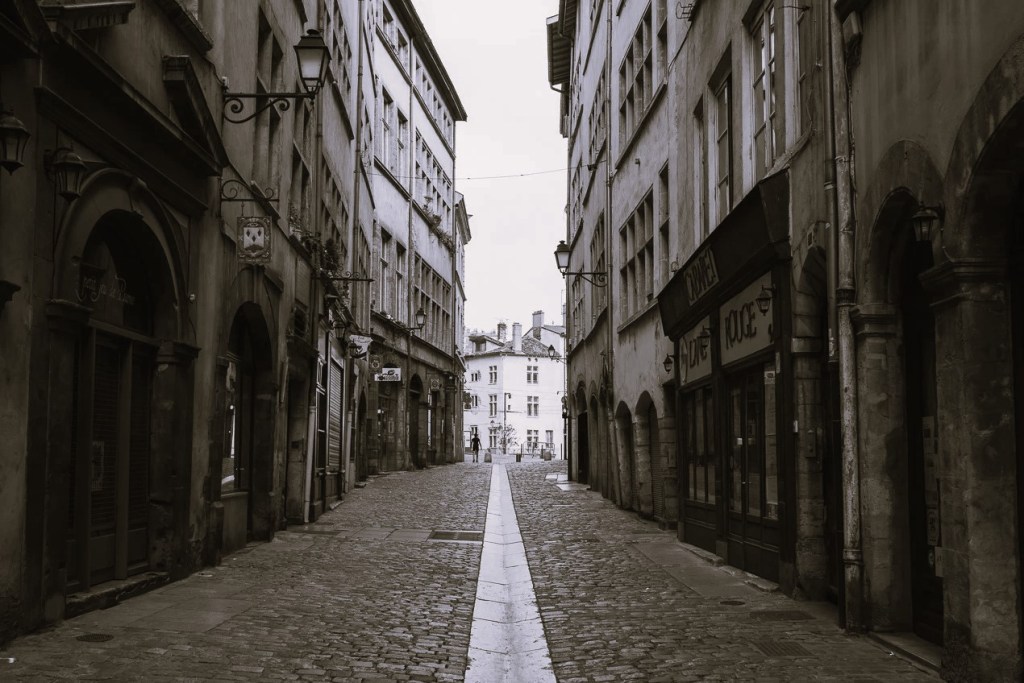
I never thought much about loyalty until the morning I watched my dearest friend choose between my life and his own conscience. The year was 1943, and the cobblestones of occupied Lyon glistened with autumn rain as I pressed myself against the cold brick wall of the safe house, my heart hammering against my ribs like a caged bird.
Through the grimy window, I could see Henri’s familiar silhouette bent over the wireless set, his fingers dancing across the keys with the same delicate precision he’d once used to repair pocket watches in his father’s shop. Now, instead of mending timepieces, he mended broken communication lines for the Resistance, sending coded messages that could mean the difference between life and death for dozens of our comrades.
The Gestapo had been closing in for weeks. We all knew it was only a matter of time before someone talked, before the careful network we’d built began to unravel like a poorly knitted jumper. What I hadn’t expected was to discover that the someone might be Henri himself.
I’d come early that morning to collect the latest intelligence reports, slipping through the narrow alleyways that had become as familiar to me as the lines on my own palm. But as I approached the building, I’d spotted the black Mercedes parked discretely around the corner—too clean, too pristine for this shabby quarter of the city. My blood had turned to ice water in my veins.
Now, crouched in the shadows, I watched as Henri continued his work, apparently oblivious to the danger lurking mere metres away. Or was he? A terrible doubt began to gnaw at my stomach like hunger. Had my oldest friend, the boy who’d shared his lunch with me every day at school, the young man who’d stood as witness at my wedding, become a collaborator?
The evidence had been mounting for weeks, though I’d refused to see it. Operations that Henri knew about had been compromised. Safe houses he’d visited had been raided within days. And yet, somehow, Henri himself remained untouched, his cover intact whilst others around us disappeared into the night.
I thought of Marie Dubois, barely nineteen, who’d been arrested after a drop that only Henri and I had known about. I thought of old Professor Laurent, dragged from his flat in the middle of the night after Henri had delivered messages there. The weight of their fates pressed down upon my shoulders like a lead blanket.
But then I remembered other things too. Henri’s face when we’d received news that his younger brother had been killed fighting with the Free French in North Africa. The way his hands had shaken as he’d decoded the message confirming that another of our cells had been wiped out. The tears I’d seen him shed over his wireless set late one night, when he’d thought no one was watching.
This was the same Henri who’d shared his meagre rations with the Jewish family we’d hidden in his cellar for three months. The same Henri who’d risked his life to carry medical supplies to wounded partisans in the mountains. Could such a man truly be a traitor?
The sound of boots on cobblestones shattered my reverie. Through the morning mist, I could see them approaching—six SS officers moving with the predatory confidence of hunters who’d cornered their prey. My mouth went dry as parchment. Whatever Henri’s loyalties, he was about to face a reckoning.
I had perhaps thirty seconds to make a choice that would define not only my own fate, but my understanding of friendship itself. I could slip away into the maze of alleyways, preserving my own life and the intelligence I carried. It would be the sensible thing to do, the strategic choice that would serve the greater cause.
Or I could warn Henri, even if it meant revealing my own position to the enemy.
My legs made the decision before my mind could catch up. I found myself moving towards the building, my feet silent on the wet stones. Through the window, I could see Henri’s profile, still bent over his work, his brow furrowed in concentration. The wireless crackled softly, and I caught fragments of the message he was transmitting: coordinates for a supply drop that would feed dozens of families in the coming weeks.
The boots were closer now. I could hear the officers speaking in low, guttural German. My hand found the loose brick we’d designated as our emergency signal—three quick taps that meant immediate danger. But as I raised my fist to knock, I hesitated.
What if Henri truly was working for them? What if this was all an elaborate trap, and I was about to walk straight into it? The doubt clawed at my chest, making it difficult to breathe.
But then Henri looked up, and our eyes met through the glass. In that instant, I saw not the calculating gaze of a collaborator, but the warm, familiar eyes of the boy who’d helped me climb down from the old oak tree when I’d been too frightened to descend on my own. I saw the young man who’d held my hand at my father’s funeral, who’d celebrated with me when my first child was born, who’d never once broken a confidence or betrayed a trust in all the years I’d known him.
I knocked.
Henri’s head snapped towards the sound, and I saw understanding flash across his features. Without hesitation, he began destroying the evidence—burning papers, dismantling the wireless, erasing any trace of our operations. His movements were swift and efficient, born of long practice and careful planning.
The front door burst open just as Henri finished his work. I pressed myself deeper into the shadows, watching as the SS officers flooded into the room. They found nothing—no wireless, no papers, no evidence of resistance activity. Just a young man sitting calmly at a table, reading a book of poetry.
But they arrested him anyway.
As they dragged Henri away, he caught sight of me in my hiding place. For just a moment, our eyes met again, and he smiled—not the bitter smile of a man facing torture and death, but the gentle, knowing smile of someone who understood that he’d been given the greatest gift one person can give another: the benefit of the doubt when doubt was all that remained.
I never saw Henri again. Three weeks later, we received word that he’d died under interrogation, having revealed nothing. In his cell, the guards found a single message scratched into the stone wall: “Trust is the foundation upon which all else is built.”
It was only then that I learned the truth. Henri had indeed been meeting with the Germans—but not as a collaborator. He’d been feeding them false information, carefully crafted lies that had saved countless lives whilst appearing to betray our cause. The operations that had been compromised were ones he’d deliberately sacrificed to maintain his cover, choosing to lose small battles in order to win larger ones.
He’d been the most loyal friend any of us could have asked for, and I’d doubted him.
Now, decades later, when people ask me what quality I value most in a friend, I think of Henri’s smile in that final moment. I think of the trust he’d placed in me to make the right choice, even when the evidence suggested I shouldn’t. And I know that loyalty—true loyalty—isn’t about blind faith or unquestioning support.
It’s about choosing to believe in someone’s essential goodness, even when the world gives you every reason to doubt. It’s about standing by those we love, not because we’re certain they’re perfect, but because we’re certain they’re worth the risk.
That, I’ve learned, is the rarest and most precious gift one human being can offer another.
The End
Bob Lynn | © 2025 Vox Meditantis. All rights reserved.

 Vox Meditantis
Leave a comment